United Kingdom · Aberdeen City
Dyce Work Camp
Data is aggregated from public sources and may be incomplete or out of date. Always verify with primary sources before acting on any figure. See data sources.
For families
How to send mail, money, and visit Dyce Work Camp
Step-by-step guidance using the United Kingdom system — addresses, money services, visit booking, what to bring on your first visit.
Background
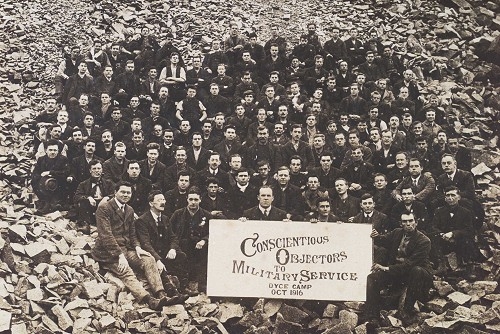
Dyce Work Camp was set up in August 1916 at quarries north-west of Aberdeen, Scotland, to accommodate conscientious objectors who had been in prison for refusing military service in World War I. These men, mostly from England, had been released on the condition that they performed "work of national importance" â breaking up granite rock to produce stone for road building. The conditions in the tented camp near the village of Dyce were poor, exacerbated by the very wet weather, and one man died of pneumonia without receiving medical treatment. Following an inquiry and a debate in parliament, the camp was closed in October 1916, with the ministerial statement that it had always been intended to be only temporary.
Source: Wikipedia article lead, CC-BY-SA.
Capacity
—
Current population
—
Occupancy
—
Year opened
—
Closed 1916
Figures from official sources · verified 22 May 2026 · methodology
Facility profile
Operator
—
Population held
Mixed/unknown
Opened
—
Region
Aberdeen City
Security level
—
Death-row facility
No
Conditions
No conditions summary available yet.
Visiting
No visiting information available.
Mailing
No mailing information available.
Practical info
Contact the operator's website for inmate-specific procedures.
Known issues
No major issues documented in our database.
Contact & address
No public contact details available.
Conditions Risk Score
Derived signal — not a judgement. How it's calculated
Related facilities
Same country, matched on type + security level where possible.
- HMP WandsworthLondonHighLocal159% occupancy
- HMP FranklandDurhamMaximumLocal100% occupancy
- HMP BarlinnieGlasgowHighLocal147% occupancy
- HMP Cookham WoodKentHighLocal
- HMP PentonvilleLondonHighYOI137% occupancy
- HMP StyalWilmslowHighClosed female
Data completeness
16%How many of our profile fields are populated. We surface this so families and researchers know the limits.
Sources
- Wikipedia — Wikimedia Foundation
- Wikidata — Wikimedia Foundation
- Wikidata (Q28231978)
- Wikipedia
- See /data-sources for our overall methodology.
Cite this page
Under CC-BY-4.0. Include the URL and access date; the site is a living reference and entries can change.
World Prisons. (2026). Dyce Work Camp. Retrieved October 20, 2026, from https://worldprisons.com/prisons/dyce-work-camp
"Dyce Work Camp." World Prisons. Accessed October 20, 2026. https://worldprisons.com/prisons/dyce-work-camp.
@misc{worldprisons-dyce-work-camp,
  author = {{World Prisons}},
  title = {Dyce Work Camp},
  year = {2026},
  url = {https://worldprisons.com/prisons/dyce-work-camp},
  urldate = {2026-10-20}
}