United Kingdom · London · London
HMP Wandsworth
Data is aggregated from public sources and may be incomplete or out of date. Always verify with primary sources before acting on any figure. See data sources.
For families
How to send mail, money, and visit HMP Wandsworth
Step-by-step guidance using the United Kingdom system — addresses, money services, visit booking, what to bring on your first visit.
.jpg)
Gallery
From Wikimedia Commons (CC-BY-SA where not otherwise stated).

Photo by PrisonImage via Wikimedia Commons (CC BY 4.0)
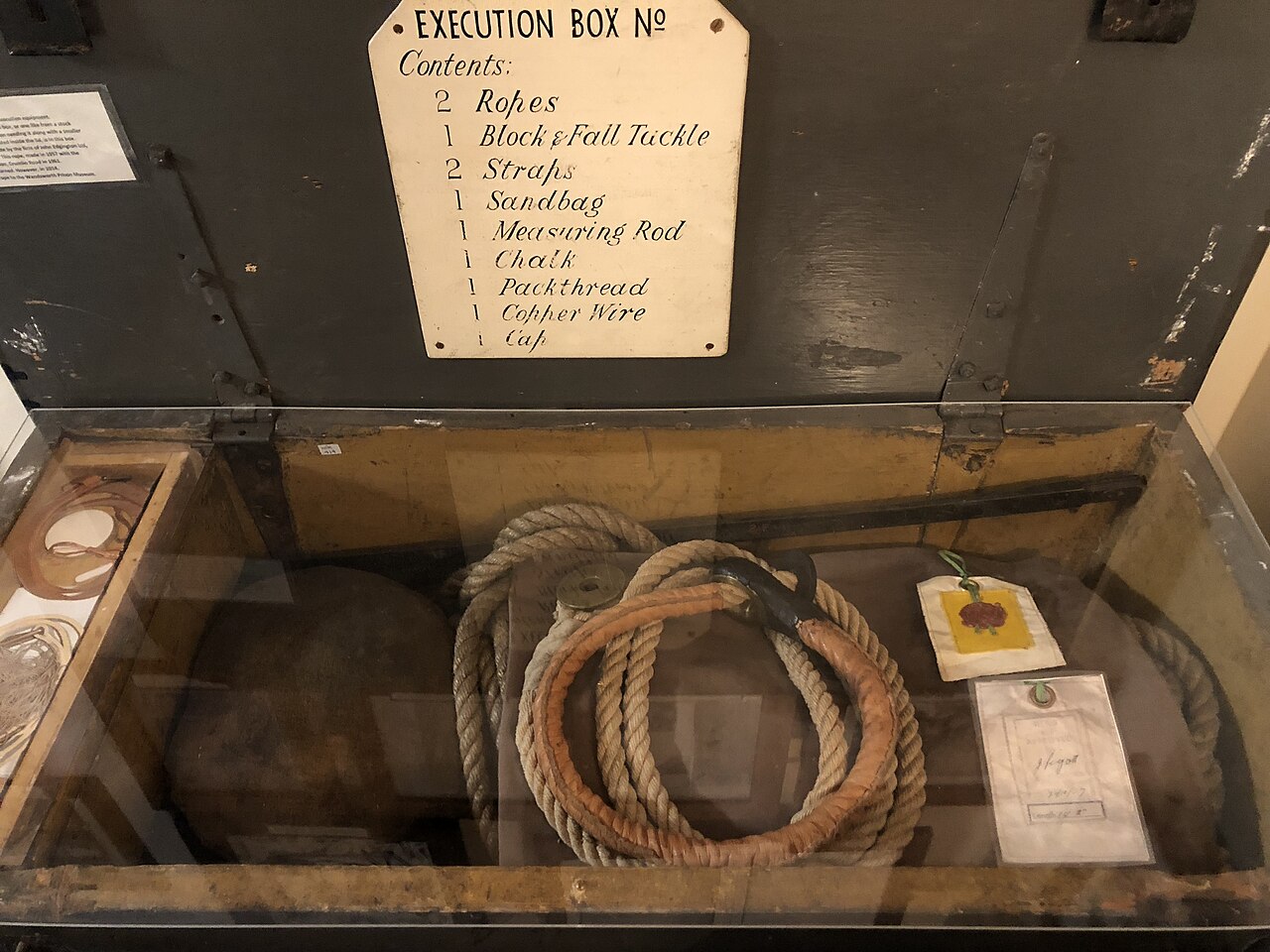
Photo by SchroCat via Wikimedia Commons (CC BY-SA 4.0)

Photo by David Smith via Wikimedia Commons (CC BY-SA 2.0)

Photo by Patrick Mahon, Eastbourne, 1923 or 1924. via Wikimedia Commons (Public domain)

Photo by SchroCat via Wikimedia Commons (CC BY-SA 4.0)

Photo by Robin Webster via Wikimedia Commons (CC BY-SA 2.0)

Photo by Professional studio photographer, 1912. via Wikimedia Commons (Public domain)

Photo by Thomas Nugent via Wikimedia Commons (CC BY-SA 2.0)
UK Local prison operated by HM Prison & Probation Service. Listed in the GOV.UK Find a prison directory.
Background
HM Prison Wandsworth is a Category B men's prison at Wandsworth in the London Borough of Wandsworth, South West London, England.
Source: Wikipedia article lead, CC-BY-SA.
Capacity
943
Current population
1,500
Occupancy
159%
Year opened
1851
Operational
Figures from official sources · verified 7 Jul 2026 · methodology
Facility profile
Operator
HM Prison & Probation ServicePopulation held
male
Opened
1851
Region
London
Security level
High
Death-row facility
No
Conditions
This review visit followed up on the concerns we raised at our last made the following judgements about outcomes for prisoners. Figure 1: HMP Wandsworth healthy prison outcomes in 2021 and 2024 At the full inspection in 2024, outcomes were largely poor and still of illicit drugs was widespread, while supply reduction work lacked rigour. Random mandatory drug testing (MDT) had only just restarted and showed that around 44% of prisoners were using drugs. Despite a inflicted deaths since the previous inspection. — UK IMB Annual Report (2024) — Safety: 4.1 Reception and induction Issues described in previous reports largely remain. With the overall prison system close to capacity throughout the period under review, HMP Wandsworth was under pressure to take more prisoners, even though it was reporting itself as full. The prison generally refused to take vans after 8.30pm as, otherwise, there would be insufficient staff in reception and later [...] Respect: 5.1 Accommodation, clothing, food Over 90% of prisoners were required to share cells that were constructed in the Victorian era for single occupancy. Unless fundamental changes and upgrades are made to the prison, it will remain inhumane and unfit for purpose. In October, K wing in Trinity, was closed to make way for a substantial refurbishment, including CCTV, fire safety and window [...] Purposeful activity: On average, there were around 800 daily activity spaces across morning and afternoon sessions. Allocation figures were in the 85%-94% range, often subject to the churn of prisoners entering and exiting the prison. Activity places were allocated in waiting list order. In an improvement on the previous reporting period, activity opportunities were available to more men as a result of strict [...] Preparation for release: The work load for the OMU and, particularly, the probation departments increased in July, following the Government announcement of an early release scheme to free up prison capacity. Under the scheme, certain prisoners would be released in September after serving only 40% of their sentence. Probation was under pressure to find accommodation for the men and some were released with no fixed abode. [...]
Visiting
This review visit followed up on the concerns we raised at our last some impressive improvements: the legal visits and video conferencing took place in an excellent facility and the visits hall had been decorated with
Mailing
Notification (UN) process on 8 May 2024. In that letter, and in the inspection prisoners were lucky if they got a phone call. Understandably, the governor had been focused on keeping the day-to-day
Practical info
HMP Wandsworth is a local category B reception and resettlement Note: rehabilitation and release planning became ‘preparation for release’ in October 2023. of illicit drugs was widespread, while supply reduction work lacked near 500 individuals requiring some form of mental health referral each month. scores which were poor for safety, respect and purposeful activity and not sufficiently good in preparation for release. confirm where all their prisoners were during the working day.
Known issues
of illicit drugs was widespread, while supply reduction work lacked rigour. Random mandatory drug testing (MDT) had only just restarted and showed that around 44% of prisoners were using drugs. Despite a The rate of self-harm was high and rising, and there had been 10 self- inflicted deaths since the previous inspection. Violence, including serious incidents, had also increased.
Notable inmates
 Daniel Khalife2001 · soldier
Daniel Abed Khalife (born 27 September 2001) is a former British Army network engineer and soldier.
- Seán Pádraig Ó Séaghdha1887–1971 · industrialist
 Boris Becker1967 · tennis player
Boris Franz Becker (German: [ËboËÊɪs ËbÉkÉ] ; born 22 November 1967) is a German former professional tennis player, tennis coach and a commentator.
.jpg) Julian Assange1971 · Internet activist
Julian Assange1971 · Internet activistJulian Paul Assange ( É-SAHNZH; né Hawkins; born 3 July 1971) is an Australian editor, programmer, and publisher who founded WikiLeaks in 2006.
 Oscar Wilde1854–1900 · poet
Oscar Fingal O'Fflahertie Wills Wilde (16 October 1854 â 30 November 1900) was an Irish author, poet and playwright.
 Ronnie Biggs1929–2013 · carpenter
Ronald Arthur Biggs (8 August 1929 â 18 December 2013) was a British criminal who helped plan and carry out the Great Train Robbery of 1963.
Source: Wikidata + Wikipedia.
Contact & address
Conditions Risk Score
Derived signal — not a judgement. How it's calculated
- Overcrowding
- 22/30
- Oversight reports
- 27/30
- Structural flags
- 5/15
- Death signals
- 10/15
- Conditions text
- 6/10
What the score is responding to:
- · Severely overcrowded at 159% of capacity
- · 9 oversight reports in the last 5 years
- · Substantial documented known-issues record
- · Multiple in-custody-death signals in sources
- · Severe-conditions keyword in sources
This facility scores 70. The national average across 584 scored United Kingdom facilities is 4 — 66 points above national average.
Trend over time
Population and occupancy by year. Source: official corrections statistics + oversight reports.
Population held
Occupancy %
Related facilities
Same country, matched on type + security level where possible.
- HMP BarlinnieGlasgowHighLocal147% occupancy
- HMP Cookham WoodKentHighLocal
- HMP NottinghamNottinghamHighLocal
- HMP BristolBristolHighLocal
- HMP BirminghamBirminghamHighLocal
- HMP LiverpoolLiverpoolHighLocal
Compared to other facilities in United Kingdom
583 peersHigher risk than 100% of peer facilities in United Kingdom.
Reports
- HMIP12 May 2025
1.1 HMP Wandsworth is a local category B reception and resettlement prison for men. It has a high turnover of prisoners and about half of men are on remand. 1.2 This review visit followed up on the concerns we raised at our last inspection of HMP Wandsworth in 2024. What we found at our last inspection 1.3 At our previous inspections of HMP Wandsworth in 2021 and 2024 we made the following judgements about outcomes for prisoners. Figure 1: HMP Wandsworth healthy prison outcomes in 2021 and 2024 Note: rehabilitation and release planning became ‘preparation for release’ in October 2023. 1.4 At the full inspection in 2024, outcomes were largely poor and still declining across a range of areas. The wings were chaotic and the use of illicit drugs was widespread, while supply reduction work lacked rigour. Random mandatory drug testing (MDT) had only just restarted and showed that around 44% of prisoners were using drugs. Despite a high-profile escape, there were ongoing weaknesses in procedural and dynamic security. 1.5 The rate of self-harm was high and rising, and there had been 10 self- inflicted deaths since the previous inspection. Violence, including serious incidents, had also increased. This was higher than at most similar prisons. 1.6 The prison was badly overcrowded and living conditions were poor. In our survey, only 41% of prisoners said that most staff treated them with
- HMIP22 Apr 2024
Built 170 years ago, Wandsworth prison in south London has come to epitomise the decaying inner city Victorian institution, symbolic of the problems that characterise what is worst about the English prison system. An overcrowded reception prison with a significant turnover of population, at the time of the inspection it held over 1,500 men. Of these, half were on remand and nearly half were foreign nationals, with the level of need perhaps best evidenced in the near 500 individuals requiring some form of mental health referral each month. The findings of our inspection led me to write, in accordance with the protocol I have with the Ministry of Justice, to the Secretary of State invoking the Urgent Notification (UN) process on 8 May 2024. In that letter, and in the inspection debriefing paper that accompanied it, I set out my concerns about the jail. Under the protocol, the Secretary of State commits to respond publicly to the UN within 28 days, explaining how outcomes for those detained will be improved. The publication of that response was quite understandably delayed owing to purdah with respect to the recent (2024) general election. At the time of our inspection, Wandsworth was a prison still reeling from a very high-profile escape that occurred in late 2023. Our findings suggest that security remained a significant concern, although failings were evident in almost all aspects of the prison’s operation, a fact reflected in our healthy prison test scores which were poor for safety, respect and purposeful activity and not sufficiently good in preparation for release. We found chaos on the wings, and staff across most units were unable to confirm where all their prisoners were during the working day. There was, for example, no reliable roll check that could assure leaders that all prisoners were accounted for. Given the recent escape, and the amount of input from the prison service, it was unfathomable that leaders had not focussed their attention on this area. There had been 10 self-inflicted deaths since the last inspection, seven of which had occurred in the last 12 months. The rate of self-harm was high and rising, and yet around 40% of emergency cell bells were not answered within five minutes. Overall rates of violence, including serious assaults, had increased since the last inspection and were higher than most similar prisons. In our survey, 69% of prisoners said they had felt unsafe at Wandsworth. Over half (51%) of prisoners surveyed said it was easy to get illicit drugs and the smell of cannabis was everywhere. Although leaders had identified this issue as presenting the highest level of security risk, they had suspended drug testing between August 2023 and January 2024. In the most recent confirmed random drug test results (February 2024), 44% of prisoners tested positive. Wandsworth has a transient population and was badly overcrowded with very poor living conditions. Cells were cramped and ill-equipped, and the prison was still too dirty. The fabric of the buildings and facilities including showers and heating still needed significant investment to bring them up to a decent standard. In our survey only 41% of prisoners said that staff treated them with
- HMI Prisons inspection report15 Apr 2024
Among the worst inspections in recent UK history. High self-harm, high inter-prisoner violence, severe overcrowding at ~166% of design capacity.
- NPM-uk-imb-safety1 Jan 2024
4.1 Reception and induction Issues described in previous reports largely remain. With the overall prison system close to capacity throughout the period under review, HMP Wandsworth was under pressure to take more prisoners, even though it was reporting itself as full. The prison generally refused to take vans after 8.30pm as, otherwise, there would be insufficient staff in reception and later arrivals might not reach their cells until well after midnight. This could present safety risks, particularly if there was a shift change before the arrivals had been processed. There were also issues getting prisoners to court on time, due to factors including late unlocks, the general efficiency of reception, and the availability of vans. On a number of occasions, third-day induction started late and not all the relevant agencies were present. At times, there were no orderlies (trusted prisoners who take on work to provide services that contribute to the running of the prison) to show new prisoners how to use the digital kiosks (self-service computer terminals that allow prisoners to manage their daily affairs), or the kiosks were not working. The prison was focused on improving the induction process and had produced a 20-minute video as its centre piece. Any delays in prisoners being issued with PINs (personal identification numbers, which allow a prisoner to make phone calls and use other digital communication services) and having their contact numbers checked and registered were [...]
- NPM-uk-imb-preparation-for-release1 Jan 2024
The work load for the OMU and, particularly, the probation departments increased in July, following the Government announcement of an early release scheme to free up prison capacity. Under the scheme, certain prisoners would be released in September after serving only 40% of their sentence. Probation was under pressure to find accommodation for the men and some were released with no fixed abode. The prison introduced staff incentive schemes to increase productivity over the period. By late July, the OMU had reviewed 790 sentence plans. There were 23 releases in September, with reception reporting it had all been very quiet, with not many more prisoners being released than usual. 27 Key work was rolled out from November, expanding as staff became more experienced and available. It was offered to the most vulnerable prisoners first, including those on ACCTs, CSIPs, IS91s (authority to detain a person who is due for release to be held in prison because their removal from the UK is expected) and self-isolators. By December, 77 prisoners had key workers, the target being 80. The senior probation officer monitored the key work notes and reported that they were good. Social visits took place even on days when the overall regime was curtailed through lack of staff. Family days (which bring together prisoners and their families outside of their statutory entitlement to social visits, usually in more informal settings) were run regularly throughout the year, usually every month. These [...]
- NPM-uk-imb-purposeful-activity1 Jan 2024
On average, there were around 800 daily activity spaces across morning and afternoon sessions. Allocation figures were in the 85%-94% range, often subject to the churn of prisoners entering and exiting the prison. Activity places were allocated in waiting list order. In an improvement on the previous reporting period, activity opportunities were available to more men as a result of strict guidelines about how many roles a prisoner could hold at a time; in principle, opportunities were available to half the prison population by the end of the reporting period. Average off-wing attendance over the year was 48% in education and 77% in industries; the men continued to be affected by late roll calls, inexperienced or unwilling staff, and low staff availability to escort them. Competing factors affecting the men’s ability to participate in purposeful activity included unreliable access to S&Ds, showers and gym, and early starts. Average on-wing attendance was 87%. Whilst acknowledging improvements in the range and number of activity spaces available, the Board remained concerned that too many men had no access to work or education and remained in their cells for too much of the day. Curriculum pathways, a series of linked courses, continued, with men being given education ‘passports’ to take with them if they were transferred elsewhere. In an improvement from the previous reporting period, ESOL (English for speakers of other languages) classes were available to some prisoners on [...]
- NPM-uk-imb-respect1 Jan 2024
5.1 Accommodation, clothing, food Over 90% of prisoners were required to share cells that were constructed in the Victorian era for single occupancy. Unless fundamental changes and upgrades are made to the prison, it will remain inhumane and unfit for purpose. In October, K wing in Trinity, was closed to make way for a substantial refurbishment, including CCTV, fire safety and window replacements. As a result of poor planning, the work did not start until the following March. The Board understood the intention was to undertake similar work on each wing, in turn, across the prison. However, as it could take up to one year per wing, the whole process could take up to eight years to complete. Regime and time out of cell At the beginning of the reporting period, the prison was struggling to deliver a consistent regime that included both daily exercise and S&D (social and domestic) time. From the Board’s observations, curtailments were often last minute and not well communicated. This uncertainty appeared to be a focus of considerable frustration to the men. Starting in August, exercise outside was only allowed on alternate days, in order to provide some certainty to the men and deliver a more consistent regime. From January, improved record-keeping on regime curtailments was introduced. The records showed that the prison delivered the expected core day at least 80% of the time, with the exception of April, when exercise was provided on only 71% of expected days. The number of [...]
- HMPPS internal review6 Sept 2023
Daniel Khalife's escape from HMP Wandsworth exposed staffing-level failures and procedural breakdowns. Operating manager and Director-General changes followed.
- HMIP19 Jun 2022
1.1 HMP Wandsworth, an inner-city male reception prison serving the London courts, is one of the oldest and most famous prisons in the country. It is a large, complex establishment with a transient population of more than 1,400 adult and young adult prisoners, ranging from those recently remanded to others serving significant sentences. 1.2 At our previous inspections of HMP Wandsworth in 2018 and 2021, we made the following judgements about outcomes for prisoners. Figure 1: HMP Wandsworth healthy prison outcomes in 2018 and 2021 Good Reasonably good Not sufficiently good Poor
- HMIP20 Sept 2021
The decision by the prison service to reduce the number of prisoners held at Wandsworth by 300, as well as the work of the dynamic and experienced governor, had stopped this busy local prison from being overwhelmed by its many challenges. There were not enough staff to make sure prisoners received even the most basic regime; for example, they sometimes had to choose between exercise, ordering from the kiosk and having a shower. Gym sessions were regularly cancelled and much of the essential resettlement and sentence progression work was not happening because prison offender managers and PE staff were deployed on the wings to backfill staff absences. One group of prisoners from Trinity Unit, who came blinking into the sunlight, told me that it was the first time they had been outside for more than a week. The education provider had failed to do enough to engage prisoners or develop learning opportunities for a population that was desperately bored. The education block had sat unused since March 2020 and most of the very limited provision came in the form of work packs. Education staff were barely doing any face-to-face teaching, so it was not entirely clear how their time was being spent. Nearly half of the prisoners were foreign nationals, many of whom come from eastern Europe. The prison, the education service and, in particular, Home Office staff, were not doing enough to support this group of prisoners. There were 37 prisoners over their tariff waiting for a decision on when or if they would be deported. Some foreign national prisoners had even been told on the day of their release that they were to continue to be held in the jail. A local charity, BEST, had stayed on site during the pandemic and were doing invaluable work in supporting foreign national prisoners while, inexplicably, Home Office staff had absented themselves from the prison for more than a year. In the meantime, prison officers and other staff had to deal with the consequences of their inaction. Even since Home Office staff had returned, working what appeared to be limited hours, they were not running surgeries on the wing and prisoners were lucky if they got a phone call. The infrastructure of the jail needed a lot of work: cells and landings were often tatty, some of the showers were awful and outside areas were strewn with rubbish. The inpatient mental health unit, due to be refurbished, was not a fit place to care for seriously unwell patients. Fortunately, there had also been some impressive improvements: the legal visits and video conferencing took place in an excellent facility and the visits hall had been decorated with prisoner-painted murals. Communication between the governor through a range of media (including Radio Wanno) had meant that prisoners were kept well informed about the pandemic and any developments in the prison. This may have contributed to the generally calm atmosphere in the jail – which we witnessed – despite the paucity of the regime. Interactions between officers and prisoners were, because of staffing shortages, largely transactional. Key work was very limited, although prisoners recognised that often staff were trying to do their best. Understandably, the governor had been focused on keeping the day-to-day functions of the prison going as he dealt with the extensive list of challenges that we highlight in this report. He now has the opportunity, with an improving
- HMIP13 Jul 2018
Full inspection of Wandsworth (2018-07-13)
Data completeness
100%How many of our profile fields are populated. We surface this so families and researchers know the limits.
Sources
- GOV.UK â HMP Wandsworth
- GOV.UK Find a prison index
- Wikipedia — Wikimedia Foundation
- Find a prison â GOV.UK — UK Ministry of Justice / HMPPS
- HM Inspectorate of Prisons â reports — HMI Prisons (UK)
- GOV.UK Find a prison â collection — UK Ministry of Justice / HMPPS
- Wikidata — Wikimedia Foundation
- Wikidata (Q386707)
- Wikipedia
- Wikimedia Commons
- See /data-sources for our overall methodology.
Cite this page
Under CC-BY-4.0. Include the URL and access date; the site is a living reference and entries can change.
World Prisons. (2026). HMP Wandsworth. Retrieved October 20, 2026, from https://worldprisons.com/prisons/hmp-wandsworth
"HMP Wandsworth." World Prisons. Accessed October 20, 2026. https://worldprisons.com/prisons/hmp-wandsworth.
@misc{worldprisons-hmp-wandsworth,
  author = {{World Prisons}},
  title = {HMP Wandsworth},
  year = {2026},
  url = {https://worldprisons.com/prisons/hmp-wandsworth},
  urldate = {2026-10-20}
}