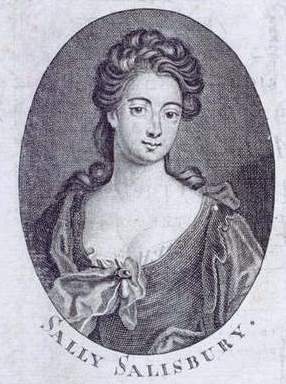
Sally Salisbury
1690–1724
- Nationality
- Kingdom of Great Britain
- Occupation
- prostitute
Sarah Pridden (c.
Incarceration history
Facilities
- Newgate PrisonDates unknown
- MarshalseaDates unknown
Biography
Sarah Pridden (c. 1692 â 1724), commonly known as Sally Salisbury, was a celebrated prostitute in early 18th-century London. She was the lover of many notable members of society, and socialised with many others. In 1722 she stabbed and wounded a client, the politician John Finch, who was a son of Daniel Finch, 2nd Earl of Nottingham and Anne Finch, Countess of Nottingham. She was found guilty of assault, but not guilty of attempted murder. Salisbury was sentenced to one year's imprisonment. She was sent to Newgate Prison to serve her sentence but died in prison after only nine months.
Related people
Same nationality and era where possible; falls back to shared nationality or era.
 Jonathan Wild1683–1725Kingdom of Great Britain
Jonathan Wild, also spelled Wilde (1682 or 1683 â 24 May 1725), was an English thief-taker and a major figure in London's criminal underworld, notable for operating on both sides of the law, posing as a public-spirited vigilante entitled the "Thief-Taker General".
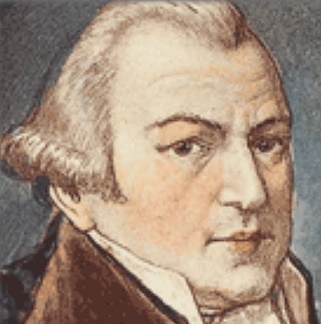 John Cleland1709–1789Kingdom of Great Britain
John Cleland (24 September 1709 â 23 January 1789) was an English novelist best known for his fictional Fanny Hill: or, the Memoirs of a Woman of Pleasure, whose eroticism led to his arrest.
 Jack Sheppard1702–1724Kingdom of Great Britain
- Hannah Glasse1708–1770Kingdom of Great Britain
Hannah Glasse (née Allgood; March 1708 â 1 September 1770) was an English cookery writer.
- Charles Hall1740–1825Kingdom of Great Britain
Charles Hall (1740â1825) was a British physician, social critic and Ricardian socialist who published The Effects of Civilization on the People in European States in 1805, condemning capitalism for its inability to provide for the poor.