Egypt · Cairo
Tora Prison
Data is aggregated from public sources and may be incomplete or out of date. Always verify with primary sources before acting on any figure. See data sources.
For families
How to send mail, money, and visit Tora Prison
Step-by-step guidance using the Egypt system — addresses, money services, visit booking, what to bring on your first visit.

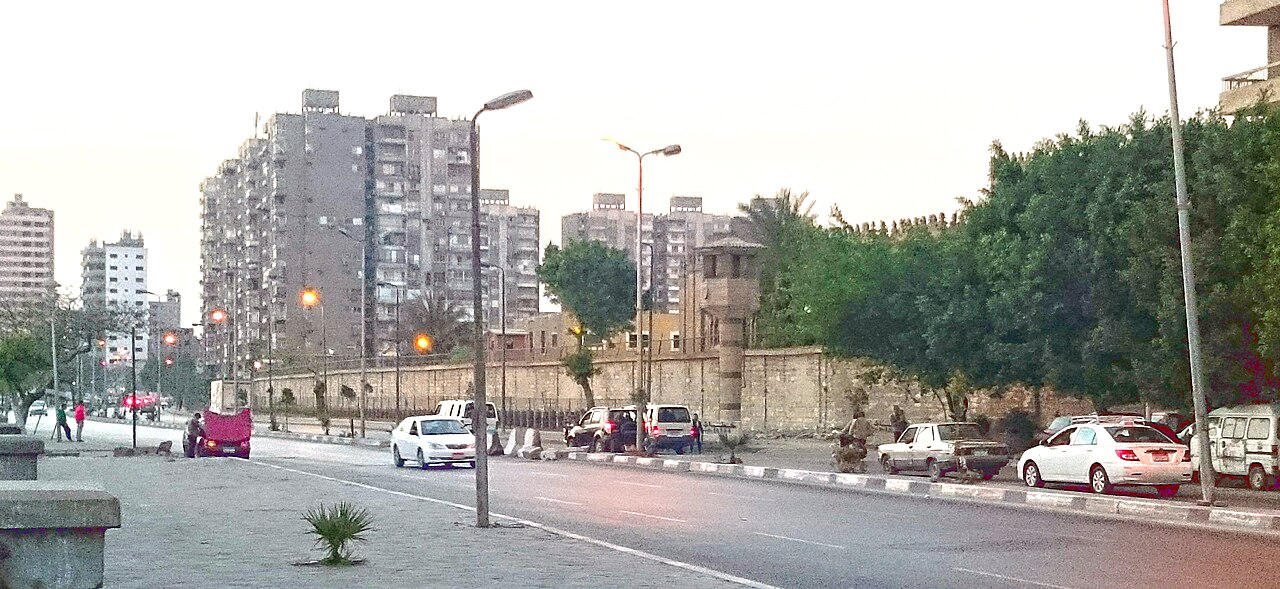
Gallery
From Wikimedia Commons (CC-BY-SA where not otherwise stated).
\[ [edit](https://en.wikipedia.org/w/index.php?title=Tora_Prison&action=edit§ion=1 "Edit section: History")\] Tora Agricultural Prison was established in 1928 by [Wafdist](https://en.wikipedia.org/wiki/Wafd_Party "Wafd Party") Interior Minister [Mostafa El-Nahas](https://en.wikipedia.org/wiki/Mostafa_El-Nahas "Mostafa El-Nahas") while he was the interior minister,[\[2\]](https://en.wikipedia.org/wiki/Tora_Prison#cite_note-2) in an effort to ease overcrowding at [Abu Zaabal](https://en.wikipedia.org/wiki/Abu_Zaabal "Abu Zaabal") Prison.[\[3\]](https://en.wikipedia.org/wiki/Tora_Prison#cite_note-3) On 1 June 1957, security guards at Tora Prison killed 21 [Muslim Brotherhood in Egypt](https://en.wikipedia.org/wiki/Muslim_Brotherhood_in_Egypt "Muslim Brotherhood in Egypt") prisoners.[\[4\]
Capacity
—
Current population
—
Occupancy
—
Year opened
1908
Operational
Facility profile
Operator
Ministry of Interior (Egypt)
Population held
Mixed/unknown
Opened
1908
Region
Cairo
Security level
Super-maximum
Death-row facility
No
Conditions
(Beirut) – The Egyptian authorities should increase transparency by making essential figures about the country’s detainee population public, nine organizations said today. The figure should include how many people have been kept in custody in recent years under the nationwide crackdown on dissent. The Egyptian Interior Ministry’s Prison Authority last released periodic figures on prisoners in the 1990s. In recent years, senior officials, including President Abdel Fattah al-Sisi, have repeatedly refused to answer journalists’ questions about the detainee population. Human rights groups believe that under President al-Sisi, the detainee population has grown dramatically as authorities have arrested tens of thousands of perceived or actual dissidents since late 2013. The crackdown has led to dangerous overcrowding in detention centers and further undermined their already-inhumane conditions. “The Egyptian government withholds information on the detainee population as if it’s a state secret, but Egyptians have a right to know how many people their government is detaining and how they are treating them,” said Amr Magdi, senior Middle East and North Africa resear The government has closed down some of the decades-old prisons such as several in the infamous Tora prison complex after building new ones, but prominent pro-government TV presenters have said that the government’s primary motivation was to sell the land to investors given its proximity to the Nile. Under President [...] (per Human Rights Watch)
Visiting
No visiting information available.
Mailing
No mailing information available.
Practical info
Contact the operator's website for inmate-specific procedures.
Known issues
No major issues documented in our database.
Notable inmates
- Adel al-Gazzar1965
Mohamed Morsi1951–2019 · politician- Hosni Mubarak1928–2020 · politician
Muhammad Hosni El Sayed Mubarak (Arabic: Ù ØÙ د ØØ³ÙÙ Ø§ÙØ³Ùد ٠بارÙâ; 4 May 1928 â 25 February 2020) was an Egyptian politician and military officer who served as the 4th president of Egypt from 1981 until his resignation in 2011, following the Egyptian revolution.
- Mahmoud Abu Zeid1987 · photojournalist
Source: Wikidata + Wikipedia.
Contact & address
No public contact details available.
Conditions Risk Score
Derived signal — not a judgement. How it's calculated
- Overcrowding
- 0/30
- Oversight reports
- 1/30
- Structural flags
- 0/15
- Death signals
- 0/15
- Conditions text
- 3/10
What the score is responding to:
- · 1 oversight report in the last 5 years
- · Severe-conditions keyword in sources
Reports
- HRW1 Jan 2023
(Beirut) – The Egyptian authorities should increase transparency by making essential figures about the country’s detainee population public, nine organizations said today. The figure should include how many people have been kept in custody in recent years under the nationwide crackdown on dissent. The Egyptian Interior Ministry’s Prison Authority last released periodic figures on prisoners in the 1990s. In recent years, senior officials, including President Abdel Fattah al-Sisi, have repeatedly refused to answer journalists’ questions about the detainee population. Human rights groups believe that under President al-Sisi, the detainee population has grown dramatically as authorities have arrested tens of thousands of perceived or actual dissidents since late 2013. The crackdown has led to dangerous overcrowding in detention centers and further undermined their already-inhumane conditions. “The Egyptian government withholds information on the detainee population as if it’s a state secret, but Egyptians have a right to know how many people their government is detaining and how they are treating them,” said Amr Magdi, senior Middle East and North Africa resear The government has closed down some of the decades-old prisons such as several in the infamous Tora prison complex after building new ones, but prominent pro-government TV presenters have said that the government’s primary motivation was to sell the land to investors given its proximity to the Nile. Under President [...] (per Human Rights Watch)
Data completeness
54%How many of our profile fields are populated. We surface this so families and researchers know the limits.
Sources
- Prisons in Egypt — Wikipedia
- Tora Prison
- Wikidata — Wikimedia Foundation
- Prisons in Egypt — Wikipedia — Wikipedia
- Wikidata (Q12215499)
- Wikipedia
- Wikimedia Commons
- See /data-sources for our overall methodology.