Oflag IV-C
Data is aggregated from public sources and may be incomplete or out of date. Always verify with primary sources before acting on any figure. See data sources.
For families
How to send mail, money, and visit Oflag IV-C
Step-by-step guidance using the Germany system — addresses, money services, visit booking, what to bring on your first visit.

Gallery
From Wikimedia Commons (CC-BY-SA where not otherwise stated).

Photo by Unknown photographer via Wikimedia Commons (Public domain)

Photo by Unknown photographer via Wikimedia Commons (Public domain)

Photo by German official photographer via Wikimedia Commons (Public domain)

Photo by German official photographer via Wikimedia Commons (Public domain)

Photo by Unknown authorUnknown author via Wikimedia Commons (Public domain)
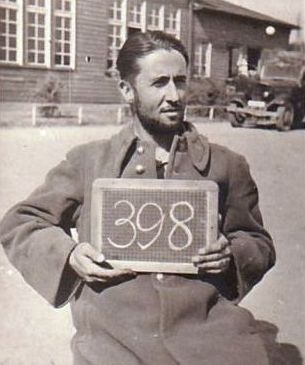
Photo by Unknown photographer via Wikimedia Commons (Public domain)

Photo by Dominiclagan via Wikimedia Commons (CC BY-SA 4.0)

Photo by Unknown via Wikimedia Commons (Public domain)
Background
Oflag IV-C, generally known as Colditz Castle, was a prominent German Army prisoner-of-war camp for captured Allied officers during World War II. Located in Colditz, Saxony, the camp operated within the medieval Colditz Castle, which overlooks the town. The word "Oflag" is an abbreviation of the German term Offizierslager, meaning "officers' camp". The camp held officers who were deemed escape risks or who had already attempted escape from other prison camps. Known for its seemingly impenetrable structure, Colditz Castle became a site of numerous escape attempts, some of which were successful, earning a reputation for the ingenuity and daring of its prisoners. The camp's history and the elaborate escape plans conceived there have been widely covered in postwar memoirs, books, and media.
Source: Wikipedia article lead, CC-BY-SA.
Capacity
—
Current population
—
Occupancy
—
Year opened
—
Operational
Figures from official sources · verified 29 May 2026 · methodology
Facility profile
Operator
—
Population held
Mixed/unknown
Opened
—
Region
—
Security level
High-security
Death-row facility
No
Conditions
No conditions summary available yet.
Visiting
No visiting information available.
Mailing
No mailing information available.
Practical info
Contact the operator's website for inmate-specific procedures.
Known issues
No major issues documented in our database.
Notable inmates
 Willem Romswinckel1900–1965 · military officer
- Louis Buisson1889–1955 · military personnel
Louis Buisson (14 December 1889 â 5 December 1955) was a French Major General.
- Martin Gilliat1913–1993 · politician
Lieutenant-Colonel Sir Martin John Gilliat (8 February 1913 â 27 May 1993) was a British soldier and courtier who served as Private Secretary to Queen Elizabeth the Queen Mother for 37 years.
- Evert Steenhouwer1900–1979 · military officer
- Lorne Welch1916–1998 · glider pilot
Patrick Palles Lorne Elphinstone Welch, (12 August 1916 â 15 May 1998), generally known as "Lorne Welch", was the son of Brig Gen Malcolm Hammond Edward Welch CB CMG, who was born in 1872 in Ahmednuggur, India, to Frederick Gibson Terell Welch and Mary Hawke.
- Machiel van den Heuvel1900–1946 · military officer
Machiel van den Heuvel (7 May 1900 in Haarlemmermeer â 29 June 1946 near Bandung) was a Dutch army officer.
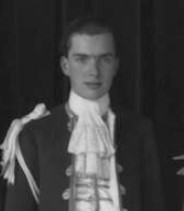 George Haig, 2nd Earl Haig1918–2009 · politician
George Alexander Eugene Douglas Haig, 2nd Earl Haig, (15 March 1918 â 9 July 2009) was a Scottish artist and peer who succeeded to the earldom of Haig on 29 January 1928, at the age of nine upon the death of his father, Field Marshal the 1st Earl Haig.
- Pete Tunstall1918–2013 · military personnel
Peter David Tunstall (1 December 1918 â 27 July 2013) was a squadron leader in the Royal Air Force during the Second World War and a prisoner of war (POW) held at Colditz Castle.
_in_North_Africa_during_the_Second_World_War_E21340.jpg) David Stirling1915–1990 · military officer
David Stirling1915–1990 · military officerLieutenant-Colonel Sir Archibald David Stirling (15 November 1915 â 4 November 1990) was a Scottish officer in the British Army and the founder and creator of the Special Air Service (SAS).
Showing 9 of 12. Source: Wikidata + Wikipedia.
Contact & address
No public contact details available.
Conditions Risk Score
Derived signal — not a judgement. How it's calculated
Related facilities
Same country, matched on type + security level where possible.
- JVA München (Stadelheim)MunichMixedJustizvollzugsanstalt93% occupancy
- Hungerturm Nähe TurmstraÃe in GroÃostheim
- Trebnitz concentration campConcentration camp
- Jugendarrestanstalt NurnbergNürnberg
- Valka-Lager
- Klinik fur Forensische Psychiatrie
Data completeness
24%How many of our profile fields are populated. We surface this so families and researchers know the limits.
Sources
- Wikipedia — Wikimedia Foundation
- Wikidata — Wikimedia Foundation
- Wikidata (Q443620)
- Wikipedia
- Wikimedia Commons
- See /data-sources for our overall methodology.
Cite this page
Under CC-BY-4.0. Include the URL and access date; the site is a living reference and entries can change.
World Prisons. (2026). Oflag IV-C. Retrieved October 15, 2026, from https://worldprisons.com/prisons/oflag-iv-c
"Oflag IV-C." World Prisons. Accessed October 15, 2026. https://worldprisons.com/prisons/oflag-iv-c.
@misc{worldprisons-oflag-iv-c,
  author = {{World Prisons}},
  title = {Oflag IV-C},
  year = {2026},
  url = {https://worldprisons.com/prisons/oflag-iv-c},
  urldate = {2026-10-15}
}