Neuengamme concentration camp
Data is aggregated from public sources and may be incomplete or out of date. Always verify with primary sources before acting on any figure. See data sources.
For families
How to send mail, money, and visit Neuengamme concentration camp
Step-by-step guidance using the Germany system — addresses, money services, visit booking, what to bring on your first visit.

Gallery
From Wikimedia Commons (CC-BY-SA where not otherwise stated).

Photo by unbekannt, die Abschrift der Rechnung stammt von der Lübecker Brotfabrik, das Foto wurde erstellt von Dr. Hochhaus via Wikimedia Commons (Public domain)

Photo by Dr. Karl-Heinz Hochhaus via Wikimedia Commons (CC BY 3.0)
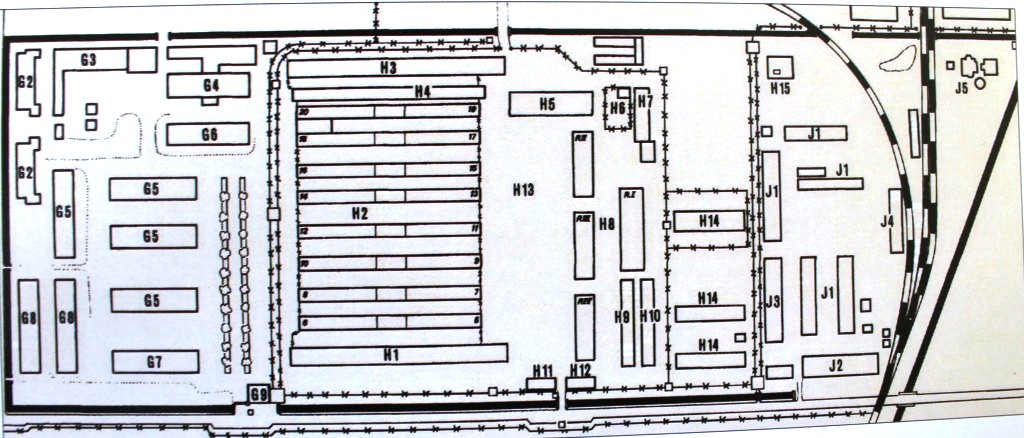
Photo by Dr. Karl-Heinz Hochhaus via Wikimedia Commons (CC BY 3.0)

Photo by Dr. Karl-Heinz Hochhaus via Wikimedia Commons (CC BY 3.0)

Photo by Unknown via Wikimedia Commons (CC BY 3.0)

Photo by Dr. Karl-Heinz Hochhaus via Wikimedia Commons (CC BY 3.0)

Photo by Dr. Karl-Heinz Hochhaus via Wikimedia Commons (CC BY 3.0)

Photo by Dr. Karl-Heinz Hochhaus via Wikimedia Commons (CC BY 3.0)
Operational period: 1938–ongoing/unknown.
Capacity
—
Current population
—
Occupancy
—
Year opened
1938
Operational
Figures from official sources · verified 16 Jun 2026 · methodology
Facility profile
Operator
—
Population held
Mixed/unknown
Opened
1938
Region
—
Security level
—
Death-row facility
No
Conditions
No conditions summary available yet.
Visiting
No visiting information available.
Mailing
No mailing information available.
Practical info
Contact the operator's website for inmate-specific procedures.
Known issues
No major issues documented in our database.
Notable inmates
- Max Bock1888–1953 · politician
- Henning Jensen1921–2018 · resistance fighter
- Leopold Heinrich Eisner1908–1942
- Paul Lamoureux1918–1945 · mechanic
- Douwe Witteveen1899–1981 · architect
.jpg) Jan den Boer1902–1944 · association football player
Jan den Boer1902–1944 · association football player- Gustav Bruhn1889–1944 · politician
.jpg) Anton de Kom1898–1945 · poet
Anton de Kom1898–1945 · poetCornelis Gerhard Anton de Kom (22 February 1898 â 24 April 1945) was a Surinamese resistance fighter and anti-colonialist author.
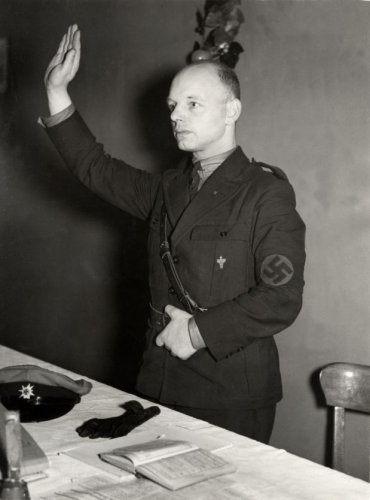 Bertus Smit1897–1994 · Esperantist
Showing 9 of 12. Source: Wikidata + Wikipedia.
Contact & address
Conditions Risk Score
Derived signal — not a judgement. How it's calculated
Related facilities
Same country, matched on type + security level where possible.
- Niemegk concentration campConcentration camp
- Giessen concentration campConcentration camp
- Horneburg concentration campConcentration camp
- Cochem-Treis concentration campConcentration camp
- Engerhafe concentration campConcentration camp
- Bielsk Podlaski concentration campConcentration camp
Data completeness
28%How many of our profile fields are populated. We surface this so families and researchers know the limits.
Sources
- EHRI Authority Record
- Wikidata entity
- Wikidata — Wikimedia Foundation
- EHRI Authority List of Camps and Ghettos / USHMM Encyclopedia of Camps and Ghettos — European Holocaust Research Infrastructure (EHRI) / United States Holocaust Memorial Museum (USHMM)
- Wikidata (Q312478)
- Wikipedia
- Wikimedia Commons
- See /data-sources for our overall methodology.
Cite this page
Under CC-BY-4.0. Include the URL and access date; the site is a living reference and entries can change.
World Prisons. (2026). Neuengamme concentration camp. Retrieved October 15, 2026, from https://worldprisons.com/prisons/neuengamme-concentration-camp
"Neuengamme concentration camp." World Prisons. Accessed October 15, 2026. https://worldprisons.com/prisons/neuengamme-concentration-camp.
@misc{worldprisons-neuengamme-concentration-ca,
  author = {{World Prisons}},
  title = {Neuengamme concentration camp},
  year = {2026},
  url = {https://worldprisons.com/prisons/neuengamme-concentration-camp},
  urldate = {2026-10-15}
}