Husum-Schwesing concentration camp
Data is aggregated from public sources and may be incomplete or out of date. Always verify with primary sources before acting on any figure. See data sources.
For families
How to send mail, money, and visit Husum-Schwesing concentration camp
Step-by-step guidance using the Germany system — addresses, money services, visit booking, what to bring on your first visit.
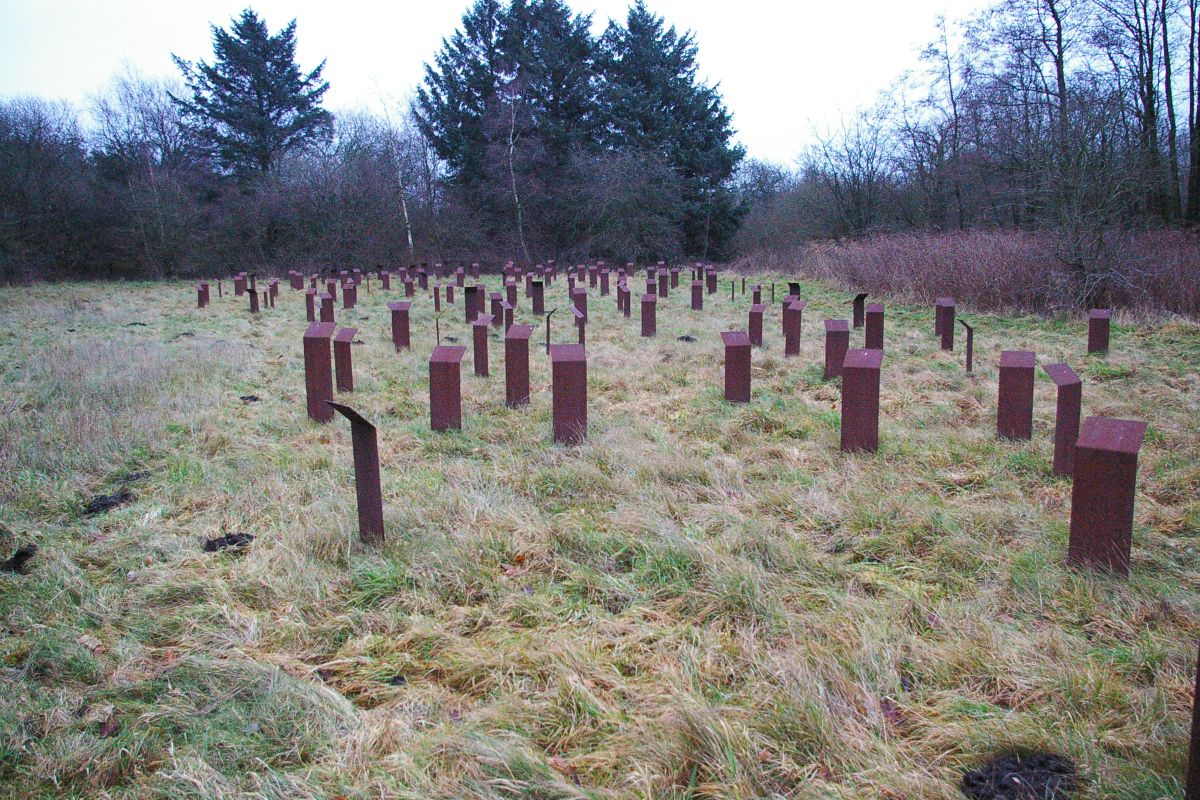
Gallery
From Wikimedia Commons (CC-BY-SA where not otherwise stated).

Photo by Husum-Schwesing via Wikimedia Commons (CC BY-SA 4.0)

Photo by Husum-Schwesing via Wikimedia Commons (CC BY-SA 4.0)

Photo by N-Lange.de via Wikimedia Commons (CC BY-SA 2.0 de)

Photo by Husum-Schwesing via Wikimedia Commons (CC BY-SA 4.0)

Photo by Husum-Schwesing via Wikimedia Commons (CC BY-SA 4.0)
Photo by N-Lange.de at de.wikipedia via Wikimedia Commons (CC BY-SA 3.0 de)

Photo by Genet (Diskussion) via Wikimedia Commons (CC BY-SA 3.0)

Photo by Genet (Diskussion) via Wikimedia Commons (CC BY-SA 3.0 de)
Operational period: 1944–1944.
Background
The Husum-Schwesing subcamp (German: KZ-AuÃenlager Husum-Schwesing) in the Schwesing district of Engelsburg, about five kilometres northeast of Husum, became a satellite of Neuengamme concentration camp on 26 September 1944 and was occupied by prisoners in connection with the construction of the so-called Frisian Wall (Friesenwall). Some 2,500 people from 14 countries were incarcerated here in autumn 1944; 297 prisoners died as a result of forced labour, malnutrition and abuse. The camp was closed on 29 December 1944.
Source: Wikipedia article lead, CC-BY-SA.
Capacity
—
Current population
—
Occupancy
—
Year opened
1944
Closed 1944
Figures from official sources · verified 16 Jun 2026 · methodology
Facility profile
Operator
—
Population held
Mixed/unknown
Opened
1944
Region
—
Security level
—
Death-row facility
No
Conditions
No conditions summary available yet.
Visiting
No visiting information available.
Mailing
No mailing information available.
Practical info
Contact the operator's website for inmate-specific procedures.
Known issues
No major issues documented in our database.
Notable inmates
- Knud Nordentoft1896–1944 · physician
- Jan Hendriks1905–1944 · grocer
 Evert Boven1919–1944 · resistance fighter
Source: Wikidata + Wikipedia.
Contact & address
Conditions Risk Score
Derived signal — not a judgement. How it's calculated
Related facilities
Same country, matched on type + security level where possible.
- Niemegk concentration campConcentration camp
- Giessen concentration campConcentration camp
- Horneburg concentration campConcentration camp
- Cochem-Treis concentration campConcentration camp
- Engerhafe concentration campConcentration camp
- Bielsk Podlaski concentration campConcentration camp
Data completeness
28%How many of our profile fields are populated. We surface this so families and researchers know the limits.
Sources
- EHRI Authority Record
- Wikidata entity
- Wikipedia — Wikimedia Foundation
- Wikidata — Wikimedia Foundation
- EHRI Authority List of Camps and Ghettos / USHMM Encyclopedia of Camps and Ghettos — European Holocaust Research Infrastructure (EHRI) / United States Holocaust Memorial Museum (USHMM)
- Wikidata (Q155459)
- Wikipedia
- Wikimedia Commons
- See /data-sources for our overall methodology.
Cite this page
Under CC-BY-4.0. Include the URL and access date; the site is a living reference and entries can change.
World Prisons. (2026). Husum-Schwesing concentration camp. Retrieved October 21, 2026, from https://worldprisons.com/prisons/husum-schwesing-concentration-camp
"Husum-Schwesing concentration camp." World Prisons. Accessed October 21, 2026. https://worldprisons.com/prisons/husum-schwesing-concentration-camp.
@misc{worldprisons-husum-schwesing-concentrati,
  author = {{World Prisons}},
  title = {Husum-Schwesing concentration camp},
  year = {2026},
  url = {https://worldprisons.com/prisons/husum-schwesing-concentration-camp},
  urldate = {2026-10-21}
}