United Kingdom · East of England · March, Cambridgeshire
HMP Whitemoor
Data is aggregated from public sources and may be incomplete or out of date. Always verify with primary sources before acting on any figure. See data sources.
For families
How to send mail, money, and visit HMP Whitemoor
Step-by-step guidance using the United Kingdom system — addresses, money services, visit booking, what to bring on your first visit.
Gallery
From Wikimedia Commons (CC-BY-SA where not otherwise stated).
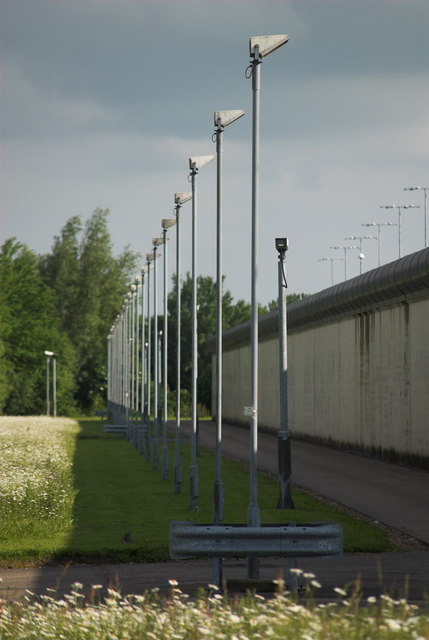
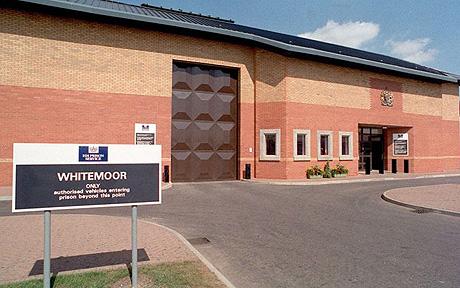
Photo by dennis smith via Wikimedia Commons (CC BY-SA 2.0)
Photo by Penningtonuk via Wikimedia Commons (CC BY-SA 3.0)
Dispersal prison holding the highest-security Category A inmates including those convicted of terror offences. Houses one of the prison estate's separation centres.
Background
HM Prison Whitemoor is a Category A men's prison near March, Cambridgeshire, England, operated by His Majesty's Prison Service.
Source: Wikipedia article lead, CC-BY-SA.
Capacity
458
Current population
458
Occupancy
100%
Year opened
1991
Operational
Figures from official sources · verified 7 Jul 2026 · methodology
Facility profile
Operator
HM Prison & Probation ServicePopulation held
male
Opened
1991
Region
East of England
Security level
Maximum
Death-row facility
No
Conditions
operates a special facility, holding a small number of some of the most Overall, this was a positive and encouraging inspection. In particular, outcomes when assessed against our healthy prison test, safety, were found to be ‘good’, activity (PA) was there no improvement, outcomes being again assessed as ‘poor’. The daily routine and regime were found to be inadequate, primarily, we were told, due to staffing shortfalls and a high level of absence across all grades. appointments, and suspicion drug testing – not being delivered consistently. — UK IMB Annual Report (2024) — Safety: 4.1 General stability The reporting year began at a very difficult time in the prison. Five serious assaults on staff had taken place before the end of May 2024. In June two young officers sadly died outside the prison. The cumulative effect of these events took its toll on staff, with morale at a low and the prison’s care team working overtime. As the year progressed, new staff began to settle [...] Respect: 5.1 Accommodation, clothing, food The general appearance of many areas of the prison was improved during the year by fresh painting of walls and bars. This had the benefit of proving useful employment for some prisoners. Cleanliness varied by wing, with the Fens unit consistently observed as the cleanest and tidiest. For much of the year there was a strong focus on cleanliness, though the age of [...] Purposeful activity: As with most other areas of the prison, Education opening improved from November 2024, as shown below. But officer shortages from April started to impinge on opening frequency. The full-time Shannon Trust coordinator made significant progress in improving prisoner literacy, along with the TRT (That Reading Thing) programme. At the end of the reporting year, there were 30 Shannon Trust prisoner [...] Preparation for release: The Board was pleased to note significant improvement in prisoner progression versus the previous year. There was limited evidence of preparation for release of the small 17 A re Ed u a ca tio n % o f se ssio Ju n -2 4 2 8 n s clo se d Ju l-2 4 1 5 A u g-2 5 4 Se p -2 5 4 O ct-2 2 1 4 N o v-2 0 4 D e c-2 1 2 4 Jan -2 5 0 Fe b -2 5 0 M ar-2 5 0 A p r-2 5 1 1 M ay-2 5 1 1 number of men with short [...]
Visiting
inpatient unit, without the usual statutory safeguards in place such as visits
Mailing
Whitemoor. Progress has been made in developing staff skills and supporting in coping with staff shortages that was illustrative of the problems at this jail. Leaders at Whitemoor rightly prioritised the security and keeping staff and
Practical info
whilst in our tests, respect and preparation for release, they were assessed as The daily routine and regime were found to be inadequate, primarily, we were This had resulted in critical work – including education, skills provision, hospital insufficient activity spaces in education, skills, and work to meet the needs of locked up during the working day. hospital beds under the Mental Health Act. Neither staff nor prisoners could explain the daily regime to inspectors, so there The provision of education was very poor, sessions were frequently cancelled The work of the offender management unit (OMU) was curtailed because of the rubbish lying around and bins were overflowing. The rigidity of the regime meant that cleaners were unlocked for as little as an hour a day, which therapy-based regime.
Known issues
appointments, and suspicion drug testing – not being delivered consistently. onto the main wings. The segregation unit showed some improvement with a
Notable inmates
Various terror-related convicts (names withheld). Historically: Reggie Kray (1990s).
Contact & address
Conditions Risk Score
Derived signal — not a judgement. How it's calculated
- Overcrowding
- 5/30
- Oversight reports
- 14/30
- Structural flags
- 5/15
- Death signals
- 10/15
- Conditions text
- 0/10
What the score is responding to:
- · Operating at 100% of design capacity
- · 6 oversight reports in the last 5 years
- · Substantial documented known-issues record
- · Multiple in-custody-death signals in sources
This facility scores 34. The national average across 584 scored United Kingdom facilities is 4 — 30 points above national average.
Related facilities
Same country, matched on type + security level where possible.
- HMP BelmarshLondonMaximumCategory A88% occupancy
- HMP Full SuttonYorkMaximumCategory A
- HMP Long LartinWorcestershireMaximumCategory A
- HMP ManchesterManchesterMaximumCategory A
- HMP Isle of WightWightMaximumCategory A
- HMP GarthPrestonMaximumCategory A
Compared to other facilities in United Kingdom
583 peersHigher risk than 75% of peer facilities in United Kingdom.
Reports
- HMIP13 Oct 2025
Located in March, Cambridgeshire, Whitemoor is a high-security prison for category A and B adult male prisoners. Nearly all were serving sentences exceeding ten years, with over three-quarters serving an indeterminate sentence. A significant number of individuals, some 80%, were assessed as presenting a very high risk of serious harm, and at the time of the inspection, of the 455 men being held, over a third were category A status, evidencing the very great risk and complexity being managed by the prison. Whitemoor also operates a special facility, holding a small number of some of the most disruptive men currently in custody in the country. This is part of a wider system of similar units which we inspect separately, so is not referred to in in this report. Overall, this was a positive and encouraging inspection. In particular, outcomes when assessed against our healthy prison test, safety, were found to be ‘good’, whilst in our tests, respect and preparation for release, they were assessed as ‘reasonably good’. In all three tests, this marked an improvement on the assessments we made when we last inspected in 2022. Only in purposeful activity (PA) was there no improvement, outcomes being again assessed as ‘poor’. The daily routine and regime were found to be inadequate, primarily, we were told, due to staffing shortfalls and a high level of absence across all grades. This had resulted in critical work – including education, skills provision, hospital appointments, and suspicion drug testing – not being delivered consistently. These issues were also symptomatic of wider systemic challenges, including recruitment and retention difficulties, which were forecast to worsen in the coming months. Compounding this inconsistency in delivery, there were insufficient activity spaces in education, skills, and work to meet the needs of the population, while for those who had actually been allocated, attendance remained low. As a consequence, we found that too many prisoners were locked up during the working day. The inspection also identified other concerns. For example, while the rate of use of force at Whitemoor was below average among dispersal prisons, the use of PAVA was disproportionately high compared to other similar establishments. Standards of cleanliness were inconsistent, with little accountability and motivation among staff to enforce good practice. Waiting times for external health appointments were too long, and often cancelled due to a lack of officer escorts, and there were significant delays in transferring patients to secure hospital beds under the Mental Health Act. Despite these challenges, we observed much that was positive in the prison. The governor and deputy governor were visible and approachable, demonstrating a clear understanding of the prison’s strengths and weaknesses and a commitment to improving the culture and delivering their vision for Whitemoor. Progress has been made in developing staff skills and supporting well-being, with investments in training, coaching, and mentoring. Strong
- NPM-uk-imb-preparation-for-release1 Jan 2024
The Board was pleased to note significant improvement in prisoner progression versus the previous year. There was limited evidence of preparation for release of the small 17 A re Ed u a ca tio n % o f se ssio Ju n -2 4 2 8 n s clo se d Ju l-2 4 1 5 A u g-2 5 4 Se p -2 5 4 O ct-2 2 1 4 N o v-2 0 4 D e c-2 1 2 4 Jan -2 5 0 Fe b -2 5 0 M ar-2 5 0 A p r-2 5 1 1 M ay-2 5 1 1 number of men with short remaining sentences, and no hard evidence that prisoner offender managers (POMs) had improved contact with prisoners. 46 prisoners transferred to real category B establishments (17 last year) and 21 to category Cs (four last year). 135 men were considered by the local board for downgrade from category A, of which 16 were recommended to the national team; six of these were approved. At the end of the reporting year, there were seven men with less than two years left to serve; of these, two had less than seven months to serve. While the Board could find no evidence of preparation for release, it was advised that they would be in the handover period to the community teams at least 10 months before their parole dates, to allow appropriate time for the community offender manager and support services to prepare them. Special arrangements are in place for those prisoners who remain as category A, as they cannot be moved to a local prison prior to release. The prisoner offender manager is key to managing a prisoner’s programmes and plays an important part in their progression. An HMIP [...]
- NPM-uk-imb-respect1 Jan 2024
5.1 Accommodation, clothing, food The general appearance of many areas of the prison was improved during the year by fresh painting of walls and bars. This had the benefit of proving useful employment for some prisoners. Cleanliness varied by wing, with the Fens unit consistently observed as the cleanest and tidiest. For much of the year there was a strong focus on cleanliness, though the age of the prison and general wear and tear made it difficult to achieve a high standard. Flooring in some areas was very poor, with ingrained dirt and cracked and broken floor coverings. There remain several showers in need of refurbishment, with visible mould on ceilings and blocked ventilation grills. Some work commenced locally but is hampered by resources and funding. Towards the end of the reporting year, regime restrictions reduced the amount of time that wing cleaners were out of cell, leading to a reduction in cleanliness noted by Board members, prisoners and staff. Problems with rodents continued, though they appear to have reduced towards the end of the reporting year. Traps provided by Rentokil catch only one rodent before having to be emptied and reset, so cannot cope with major infestations. The kitchen remains largely unchanged since its original installation over 30 years ago. The Board had major concerns about problems with the main prison kitchen, which affect the hygiene and smooth running of the unit and the provision and serving of meals in wing serveries. These are set [...]
- NPM-uk-imb-safety1 Jan 2024
4.1 General stability The reporting year began at a very difficult time in the prison. Five serious assaults on staff had taken place before the end of May 2024. In June two young officers sadly died outside the prison. The cumulative effect of these events took its toll on staff, with morale at a low and the prison’s care team working overtime. As the year progressed, new staff began to settle in and despite some short periods of disruption, mainly incidents at height and minor altercations on different wings, the Board observed that the prison was generally calm. Several serious assaults towards the end of the reporting period unsettled staff, many of whom felt that the risks to their safety had increased. However, overall violence and levels of self-harm had reduced by year end and stability improved in general. 4.2 Reception and induction The prison has remained full throughout the year, with movement into the prison much reduced from the previous year which saw wings being recanted following rewiring work. Reception and induction of arriving prisoners continued to be planned and managed well. 4.3 Suicide and self-harm, deaths in custody There were two deaths in custody – one prisoner on prisoner apparent homicide and one apparently from natural causes. Staff dealt sensitively and compassionately with end-of-life care for a terminally ill prisoner. The ACCT (assessment, care in custody and teamwork) process is in place to help support those men at risk of self-harm or [...]
- NPM-uk-imb-purposeful-activity1 Jan 2024
As with most other areas of the prison, Education opening improved from November 2024, as shown below. But officer shortages from April started to impinge on opening frequency. The full-time Shannon Trust coordinator made significant progress in improving prisoner literacy, along with the TRT (That Reading Thing) programme. At the end of the reporting year, there were 30 Shannon Trust prisoner mentors and 31 learners, from all areas of the prison. A further six learners had completed the programme. An AQA accreditation was established for mentors, 10 of whom had received the award. The Board was concerned at reported potential significant cuts to education funding from October 2025, which will put at risk programmes such as Shannon Trust and potentially increase the gap between available work and education places and the number of prisoners. Opening of workshops improved considerably from the previous reporting year, particularly following the removal of ‘red regime’ in November. The table below compares closure rates for the two reporting years. Staff shortages from April badly affected workshops, with priority being given to keeping residential wings open. Area % of sessions closed Jun Jul Aug Sep Oct Nov Dec Jan Feb Mar Apr May 2023- 34 55 35 31 53 32 36 23 29 50 50 41 Coppermills 24 (WS1) 2024- 23 19 16 5 19 0 21 0 0 3 46 38 25 2023- 37 53 28 28 45 30 30 18 32 44 50 44 Laundry 24 (WS4) 2024- 32 28 26 24 17 0 18 0 0 0 41 41 25 The Board was disappointed at the failure to [...]
- HMIP5 Dec 2022
HMP Whitemoor is a category A prison that is part of the long-term, high-secure estate. At the time of our inspection, it held 315 men of whom 40% were category A and eight were high-risk category A. When we last inspected the prison in 2017, it was running well and was awarded scores of reasonably good in each of our healthy prison tests. It was very disappointing on this inspection to find it had declined in three out of our four tests. Staffing shortfalls were certainly a factor in this decline, but levels remained much higher than in most prisons. Despite being told multiple times that officers were too busy to attend to prisoners, we often came across them congregating in wing offices or standing in pairs on the wings talking to each other. The example we give in this report of staff not bothering to answer an emergency cell bell because it ‘wasn’t their job’ showed a lack of imagination from leaders in coping with staff shortages that was illustrative of the problems at this jail. Neither staff nor prisoners could explain the daily regime to inspectors, so there was no clarity on what was supposed to be happening. It was very complicated and inflexible, and prisoners complained about frequent cancellation of activities. The situation was similar for those on the psychologically informed planned environment (PIPE) unit, where one prisoner told me it was often no different to living on a mainstream unit. The provision of education was very poor, sessions were frequently cancelled and there were not enough spaces for English and maths despite the high levels of need in the jail. Many prisoners were desperate to learn but too often were left with photocopied ‘learning’ packs delivered to their cells. The work of the offender management unit (OMU) was curtailed because of the frequent cross deployment of prison offender manager (POMs). The prison was delivering a significantly reduced number of accredited programmes, leaving prisoners feeling stuck in their sentences and unable to demonstrate the behaviour they needed to progress. There is no better sign of decline in a prison than a lack of cleanliness and at Whitemoor the wings were the dirtiest I have seen since I became Chief Inspector. Floors, walls, serveries and prisoners' kitchens were filthy, there was rubbish lying around and bins were overflowing. The rigidity of the regime meant that cleaners were unlocked for as little as an hour a day, which evidently did not give them enough time to do their job. Prisoners said cleaning materials such as mop heads were, for some inexplicable reason, in short supply. When I walked round the jail, they frequently complained to me about the dirt, a contrast to their cells which most men kept in immaculate condition. One of the bright spots in the prison was the Fen unit, which held up to 70 prisoners with personality disorders and provided a much more reliable, therapy-based regime. Here staff were actively engaged in supporting a vulnerable and potentially risky group of prisoners in an environment that was calm and relaxed. The Bridge unit, when the regime was not curtailed, also provided help for prisoners who had previously been segregated to get back onto the main wings. The segregation unit showed some improvement with a well-motivated staff group working well with some challenging prisoners, but we were concerned to see that prisoners were also being segregated on the inpatient unit, without the usual statutory safeguards in place such as visits from the duty governor, chaplain, and Independent Monitoring Board. Leaders at Whitemoor rightly prioritised the security and keeping staff and prisoners safe, but the focus was on procedure – searching, controlled unlocks, maintaining the perimeter and providing support to some particularly risky individuals. They had failed to pay sufficient attention to the other things that
- HMIP4 Aug 2020
Scrutiny inspection of HMP Whitemoor (2020-08-04)
Data completeness
100%How many of our profile fields are populated. We surface this so families and researchers know the limits.
Sources
- GOV.UK â HMP Whitemoor
- Wikipedia — Wikimedia Foundation
- Find a prison â GOV.UK — UK Ministry of Justice / HMPPS
- HM Inspectorate of Prisons â reports — HMI Prisons (UK)
- Wikidata (Q5635285)
- Wikipedia
- Wikimedia Commons
- See /data-sources for our overall methodology.
Cite this page
Under CC-BY-4.0. Include the URL and access date; the site is a living reference and entries can change.
World Prisons. (2026). HMP Whitemoor. Retrieved October 25, 2026, from https://worldprisons.com/prisons/hmp-whitemoor
"HMP Whitemoor." World Prisons. Accessed October 25, 2026. https://worldprisons.com/prisons/hmp-whitemoor.
@misc{worldprisons-hmp-whitemoor,
  author = {{World Prisons}},
  title = {HMP Whitemoor},
  year = {2026},
  url = {https://worldprisons.com/prisons/hmp-whitemoor},
  urldate = {2026-10-25}
}