Germany · Rhineland-Palatinate
Hinzert concentration camp
Data is aggregated from public sources and may be incomplete or out of date. Always verify with primary sources before acting on any figure. See data sources.
For families
How to send mail, money, and visit Hinzert concentration camp
Step-by-step guidance using the Germany system — addresses, money services, visit booking, what to bring on your first visit.

Gallery
From Wikimedia Commons (CC-BY-SA where not otherwise stated).

Photo by Asterix789 via Wikimedia Commons (CC BY-SA 4.0)

Photo by Unknown via Wikimedia Commons (Public domain)

Photo by Unknown via Wikimedia Commons (Public domain)

Photo by Unknown via Wikimedia Commons (Public domain)

Photo by Unknown via Wikimedia Commons (Public domain)
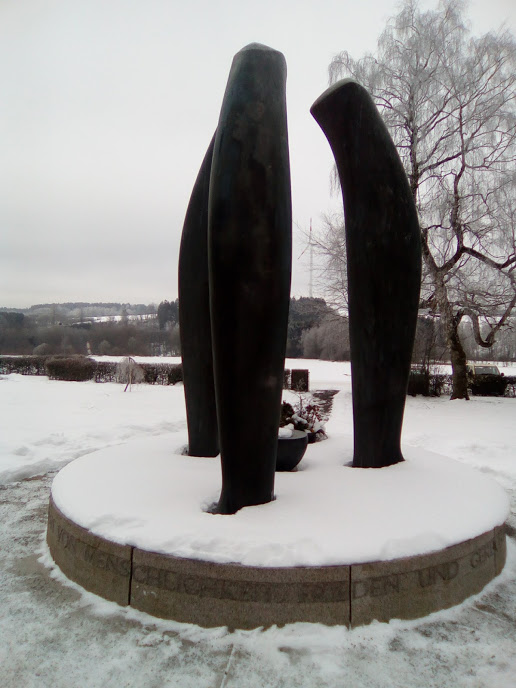
Photo by Elmar Zenner via Wikimedia Commons (CC BY-SA 4.0)

Photo by Gregor Gärtner - kadrage.tv via Wikimedia Commons (CC BY-SA 3.0 de)

Photo by L.Sieht via Wikimedia Commons (CC BY-SA 3.0)
Background
Hinzert was a concentration camp in Nazi Germany, in what is now Rhineland-Palatinate, 30 kilometres (19 mi) from the border with Luxembourg. Between 1939 and 1945, 13,600 political prisoners between the ages of 13 and 80 were imprisoned at Hinzert. Many were in transit towards larger concentration camps where most would be killed. However, many prisoners were executed at Hinzert. The camp was administered, run, and guarded mainly by the SS, who, according to survivors, were notorious for their brutality and viciousness.
Source: Wikipedia article lead, CC-BY-SA.
Capacity
—
Current population
—
Occupancy
—
Year opened
—
Operational
Figures from official sources · verified 29 May 2026 · methodology
Facility profile
Operator
—
Population held
Mixed/unknown
Opened
—
Region
Rhineland-Palatinate
Security level
—
Death-row facility
No
Conditions
No conditions summary available yet.
Visiting
No visiting information available.
Mailing
No mailing information available.
Practical info
Contact the operator's website for inmate-specific procedures.
Known issues
No major issues documented in our database.
Notable inmates
- Eugène Léger1919–1944 · resistance fighter
- François Bonamy1916–1945
 Lucien Wercollier1908–2002 · sculptor
Lucien Wercollier (26 July 1908 â 24 April 2002) was a sculptor from Luxembourg.
- Jean Crouan1906–1985 · politician
- Jean Muller1909–1976 · scout
- Noël Riou1898–1964 · police officer
- Michel Edvire1923–1943 · French resistance fighter
- Foni Tissen1909–1975 · painter
Foni (Alphonse) Tissen (1909â1975) was a Luxembourgish schoolteacher and artist who is remembered principally for his hyperrealistic, darkly humorous paintings, many of which were self-portraits.
- Lucien Wercollier1908–2002 · sculptor
Lucien Wercollier (26 July 1908 â 24 April 2002) was a sculptor from Luxembourg.
Source: Wikidata + Wikipedia.
Contact & address
No public contact details available.
Conditions Risk Score
Derived signal — not a judgement. How it's calculated
Related facilities
Same country, matched on type + security level where possible.
- JVA München (Stadelheim)MunichMixedJustizvollzugsanstalt93% occupancy
- Hungerturm Nähe TurmstraÃe in GroÃostheim
- Trebnitz concentration campConcentration camp
- Jugendarrestanstalt NurnbergNürnberg
- Valka-Lager
- Klinik fur Forensische Psychiatrie
Data completeness
16%How many of our profile fields are populated. We surface this so families and researchers know the limits.
Sources
- Wikipedia — Wikimedia Foundation
- Wikidata — Wikimedia Foundation
- Wikidata (Q697753)
- Wikipedia
- Wikimedia Commons
- See /data-sources for our overall methodology.
Cite this page
Under CC-BY-4.0. Include the URL and access date; the site is a living reference and entries can change.
World Prisons. (2026). Hinzert concentration camp. Retrieved October 23, 2026, from https://worldprisons.com/prisons/hinzert-concentration-camp
"Hinzert concentration camp." World Prisons. Accessed October 23, 2026. https://worldprisons.com/prisons/hinzert-concentration-camp.
@misc{worldprisons-hinzert-concentration-camp,
  author = {{World Prisons}},
  title = {Hinzert concentration camp},
  year = {2026},
  url = {https://worldprisons.com/prisons/hinzert-concentration-camp},
  urldate = {2026-10-23}
}