United States · Wyoming
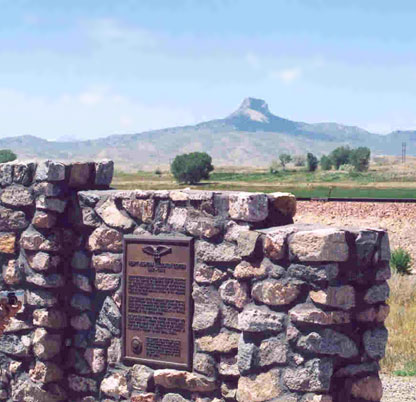
Heart Mountain Relocation Center
Data is aggregated from public sources and may be incomplete or out of date. Always verify with primary sources before acting on any figure. See data sources.
For families
How to send mail, money, and visit Heart Mountain Relocation Center
Step-by-step guidance using the United States system — addresses, money services, visit booking, what to bring on your first visit.
Gallery
From Wikimedia Commons (CC-BY-SA where not otherwise stated).

Photo by United States National Park Service via Wikimedia Commons (Public domain)

Photo by Stan ralphly via Wikimedia Commons (CC BY-SA 4.0)
Photo by Jeremykemp (talk) (Uploads) via Wikimedia Commons (CC BY-SA 3.0)

Photo by Tom Parker via Wikimedia Commons (Public domain)

Photo by Hikaru Iwasaki via Wikimedia Commons (Public domain)

Photo by Hikaru Iwasaki via Wikimedia Commons (Public domain)

Photo by Hikaru Iwasaki via Wikimedia Commons (Public domain)

Photo by Tom Parker via Wikimedia Commons (Public domain)
Background
The Heart Mountain War Relocation Center, named after nearby Heart Mountain and located midway between the northwest Wyoming towns of Cody and Powell, was one of ten concentration camps used for the internment of Japanese Americans evicted during World War II from their local communities (including their homes, businesses, and college residencies) in the West Coast Exclusion Zone by the executive order of President Franklin Roosevelt (after the bombing of Pearl Harbor in December 1941, upon the recommendation of Lieutenant General John L. DeWitt). This site was managed before the war by the federal Bureau of Reclamation as the would-be site of a major irrigation project. Construction of the camp's 650 military-style barracks and surrounding guard towers began in June 1942. The camp opened August 11, when the first Japanese Americans were shipped in by train from the internment program's "assembly centers" in Pomona, Santa Anita, and Portland. The camp would hold a total of 13,997 Japanese Americans over the next three years, with a peak population of 10,767, making it the third-largest "town" in Wyoming before its November 10, 1945, closure.
Source: Wikipedia article lead, CC-BY-SA.
Capacity
—
Current population
—
Occupancy
—
Year opened
1942
Operational
Figures from official sources · verified 29 May 2026 · methodology
Facility profile
Operator
—
Population held
Mixed/unknown
Opened
1942
Region
Wyoming
Security level
—
Death-row facility
No
Conditions
No conditions summary available yet.
Visiting
No visiting information available.
Mailing
No mailing information available.
Practical info
Contact the operator's website for inmate-specific procedures.
Known issues
No major issues documented in our database.
Notable inmates
- Louise Suski1905–2003 · editor
Louise Suski (June 27, 1905 â June 5, 2003) was the first woman editor-in-chief and English-section editor-in-chief at the Japanese-English language newspaper Rafu Shimpo.
 Shigeki Oka1878–1959 · military personnel
Shigeki Oka (岡 ç¹æ¨¹, Oka Shigeki; 1878â1959) was an issei socialist, printer, and newspaper publisher.
- Arthur Ishigo1902–1957
_in_1948.png) Robert Masato Hirohata1931–1981
Robert Masato Hirohata1931–1981- Earl Santo1931 · grocer
- Michi Onuma1908–2004 · journalist
Source: Wikidata + Wikipedia.
Contact & address
Conditions Risk Score
Derived signal — not a judgement. How it's calculated
Related facilities
Same country, matched on type + security level where possible.
- Rikers IslandEast Elmhurst, NYMixedLocal jail42% occupancy
- Franklin County Detention FacilitySt. AlbansMaximumCounty jail660% occupancy
- Gallia County JailGallipolisCounty jail336% occupancy
- Noble County JailCaldwellCounty jail542% occupancy
- Woodman State JailGatesvilleMaximumState prison720% occupancy
- Stark County JailToulonCounty jail3446% occupancy
Data completeness
20%How many of our profile fields are populated. We surface this so families and researchers know the limits.
Sources
- Wikipedia — Wikimedia Foundation
- Wikidata — Wikimedia Foundation
- Wikidata (Q5692049)
- Wikipedia
- Wikimedia Commons
- See /data-sources for our overall methodology.
Cite this page
Under CC-BY-4.0. Include the URL and access date; the site is a living reference and entries can change.
World Prisons. (2026). Heart Mountain Relocation Center. Retrieved October 20, 2026, from https://worldprisons.com/prisons/heart-mountain-relocation-center
"Heart Mountain Relocation Center." World Prisons. Accessed October 20, 2026. https://worldprisons.com/prisons/heart-mountain-relocation-center.
@misc{worldprisons-heart-mountain-relocation-c,
  author = {{World Prisons}},
  title = {Heart Mountain Relocation Center},
  year = {2026},
  url = {https://worldprisons.com/prisons/heart-mountain-relocation-center},
  urldate = {2026-10-20}
}