United States · Arizona
Gila River War Relocation Center
Data is aggregated from public sources and may be incomplete or out of date. Always verify with primary sources before acting on any figure. See data sources.
For families
How to send mail, money, and visit Gila River War Relocation Center
Step-by-step guidance using the United States system — addresses, money services, visit booking, what to bring on your first visit.

Gallery
From Wikimedia Commons (CC-BY-SA where not otherwise stated).

Photo by United States National Park Service via Wikimedia Commons (Public domain)

Photo by United States National Park Service via Wikimedia Commons (Public domain)

Photo by Technodivva via Wikimedia Commons (CC BY-SA 4.0)

Photo by Steven Jarrett Bernstein via Wikimedia Commons (CC BY-SA 3.0)

Photo by U.S. National Park Service, restoration/cleanup by National Park Maps (https://npmaps.com) via Wikimedia Commons (Public domain)

Photo by Marine 69-71 via Wikimedia Commons (CC BY-SA 4.0)

Photo by Marine 69-71 via Wikimedia Commons (CC BY-SA 4.0)

Photo by Marine 69-71 via Wikimedia Commons (CC BY-SA 4.0)
Background
The Gila River War Relocation Center was an American concentration camp in Arizona, one of several built by the War Relocation Authority (WRA) during the Second World War for the incarceration of Japanese Americans from the West Coast of the United States. It was located within the Gila River Indian Reservation (over their objections) near the town of Sacaton, about 30 mi (48.3 km) southeast of Phoenix. With a peak population of 13,348, it became the fourth-largest city in the state, operating from May 1942 to November 16, 1945.
Source: Wikipedia article lead, CC-BY-SA.
Capacity
—
Current population
—
Occupancy
—
Year opened
—
Operational
Figures from official sources · verified 29 May 2026 · methodology
Facility profile
Operator
—
Population held
Mixed/unknown
Opened
—
Region
Arizona
Security level
—
Death-row facility
No
Conditions
No conditions summary available yet.
Visiting
No visiting information available.
Mailing
No mailing information available.
Practical info
Contact the operator's website for inmate-specific procedures.
Known issues
No major issues documented in our database.
Notable inmates
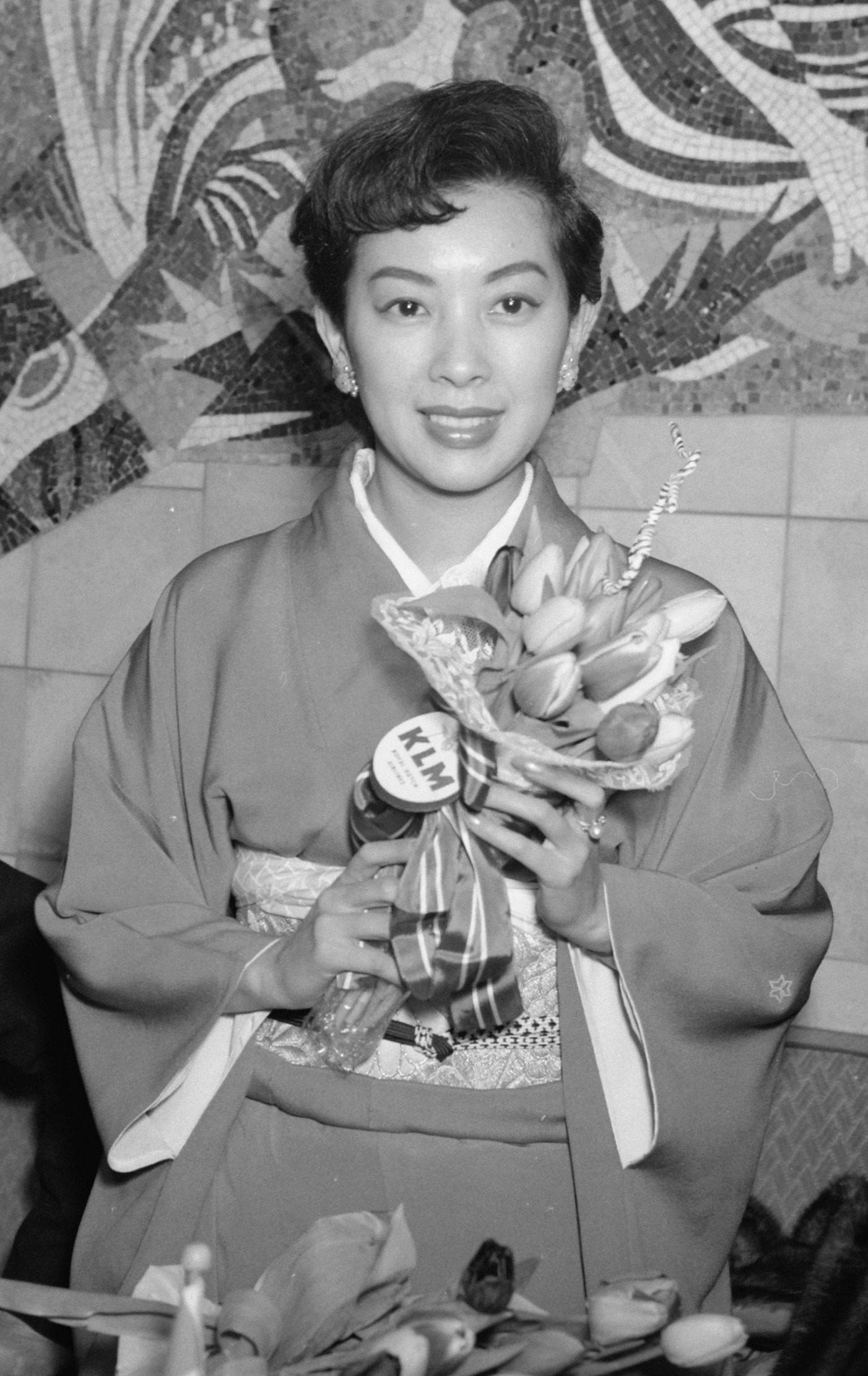 Miiko Taka1925–2023 · actor
Miiko Taka (é«ç¾ä»¥å, Taka Miiko) (born Miiko Shikata July 24, 1925 â January 4, 2023) was an American actress, popular for her film and television roles from the late 1950s until the early 1980s.
 Paul Terasaki1929–2016 · surgeon
- Evelyn Nakano Glenn1950 · sociologist
Evelyn Seiko Nakano Glenn is a professor at the University of California, Berkeley.
 Nao Takasugi1922–2009 · politician
Naoyuki Takasugi (é«æ ç´è¡, Takasugi Naoyuki; April 5, 1922 â November 19, 2009) was an American politician from California, a member of the Republican Party, and a survivor of the Japanese American internment camps.
- Michi Weglyn1926–1999 · writer
Michi Nishiura Weglyn (Japanese: 西浦 éå, November 29, 1926 â April 25, 1999) was an American author.
- James Takemori1926–2015 · judoka
James Haruyuki Takemori (Japanese: 竹森 æ´è¡, February 3, 1926 â May 15, 2015) was an American judoka and World War II veteran.
- George Hoshida1907–1985 · artist
George Yoshio Hoshida (1907, Japan-1985, Hawaii) was a Japanese American artist known for his drawings made during World War II, when he was incarcerated in three US internment camps and two Justice Department camps between 1942 and 1945.
- George Aratani1917–2013 · businessperson
George Tetsuo Aratani (èè°· å²å¤«, Aratani Tetsuo; May 22, 1917 â February 19, 2013) was a Japanese American entrepreneur, philanthropist and the founder of Mikasa china and owner of the Kenwood Electronics corporation.
- Roy Murotsune1925–2021 · proprietor
Showing 9 of 12. Source: Wikidata + Wikipedia.
Contact & address
No public contact details available.
Conditions Risk Score
Derived signal — not a judgement. How it's calculated
Related facilities
Same country, matched on type + security level where possible.
- Rikers IslandEast Elmhurst, NYMixedLocal jail42% occupancy
- Franklin County Detention FacilitySt. AlbansMaximumCounty jail660% occupancy
- Gallia County JailGallipolisCounty jail336% occupancy
- Noble County JailCaldwellCounty jail542% occupancy
- Woodman State JailGatesvilleMaximumState prison720% occupancy
- Stark County JailToulonCounty jail3446% occupancy
Data completeness
16%How many of our profile fields are populated. We surface this so families and researchers know the limits.
Sources
- Wikipedia — Wikimedia Foundation
- Wikidata — Wikimedia Foundation
- Wikidata (Q5560674)
- Wikipedia
- Wikimedia Commons
- See /data-sources for our overall methodology.
Cite this page
Under CC-BY-4.0. Include the URL and access date; the site is a living reference and entries can change.
World Prisons. (2026). Gila River War Relocation Center. Retrieved October 23, 2026, from https://worldprisons.com/prisons/gila-river-war-relocation-center
"Gila River War Relocation Center." World Prisons. Accessed October 23, 2026. https://worldprisons.com/prisons/gila-river-war-relocation-center.
@misc{worldprisons-gila-river-war-relocation-c,
  author = {{World Prisons}},
  title = {Gila River War Relocation Center},
  year = {2026},
  url = {https://worldprisons.com/prisons/gila-river-war-relocation-center},
  urldate = {2026-10-23}
}