
Bertrand Russell
1872–1970
- Nationality
- United Kingdom
- Occupation
- mathematician
Bertrand Arthur William Russell, 3rd Earl Russell (18 May 1872 â 2 February 1970), was an English philosopher, logician, mathematician, and public intellectual.
Incarceration history
Facilities
- HM Prison BrixtonDates unknown
Biography
Bertrand Arthur William Russell, 3rd Earl Russell (18 May 1872 â 2 February 1970), was an English philosopher, logician, mathematician, and public intellectual. He influenced mathematics, logic, set theory, and various areas of analytic philosophy. He was one of the early 20th century's prominent logicians and a founder of analytic philosophy, along with his predecessor Gottlob Frege, his friend and colleague G. E. Moore, and his student and protégé Ludwig Wittgenstein. Russell with Moore led the British "revolt against idealism". Together with his former teacher Alfred North Whitehead, Russell wrote Principia Mathematica, a milestone in the development of classical logic and a major attempt to reduce the whole of mathematics to logic (see logicism). Russell's article "On Denoting" has been considered a "paradigm of philosophy". Russell was educated at Trinity College at the University of Cambridge, where he graduated in 1893. He was a pacifist who championed anti-imperialism and chaired the England-based India League. He went to prison for his pacifism during the First World War, and he initially supported appeasing Adolf Hitler's Nazi Germany, before changing his view in 1943, describing war as a necessary "lesser of two evils". In the wake of the Second World War, he welcomed American global hegemony in preference to either Soviet hegemony or no (or ineffective) world leadership, even if it were to come at the cost of using their nuclear weapons. He later criticised Stalinist totalitarianism, condemned the United States' involvement in the Vietnam War, and become an outspoken proponent of nuclear disarmament. In 1950, Russell was awarded the Nobel Prize in Literature "in recognition of his varied and significant writings in which he champions humanitarian ideals and freedom of thought". He was also the recipient of the De Morgan Medal (1932), Sylvester Medal (1934), Kalinga Prize (1957), and Jerusalem Prize (1963).
Related people
Same nationality and era where possible; falls back to shared nationality or era.
- Benjamin Dale1885–1943United Kingdom
Benjamin James Dale (17 July 1885 â 30 July 1943) was an English composer and academic who had a long association with the Royal Academy of Music.
 Thomas Humphrey Marshall1893–1981United Kingdom
Thomas Humphrey Marshall (19 December 1893 â 29 November 1981) was an English sociologist who is best known for his essay "Citizenship and Social Class," a key work on citizenship that introduced the idea that full citizenship includes civil, political, and social citizenship.
 Leonora Cohen1873–1978United Kingdom
Leonora Cohen (née Throp; 15 June 1873 â 4 September 1978) was an English suffragette and trade unionist, and one of the first female magistrates.
_-_Elliott_&_Fry,_London_LCCN99401870_(frameless).jpg) Horatio Bottomley1860–1933United Kingdom
Horatio Bottomley1860–1933United KingdomHoratio William Bottomley (23 March 1860 â 26 May 1933) was an English financier, journalist, editor, newspaper proprietor, swindler, and Member of Parliament.
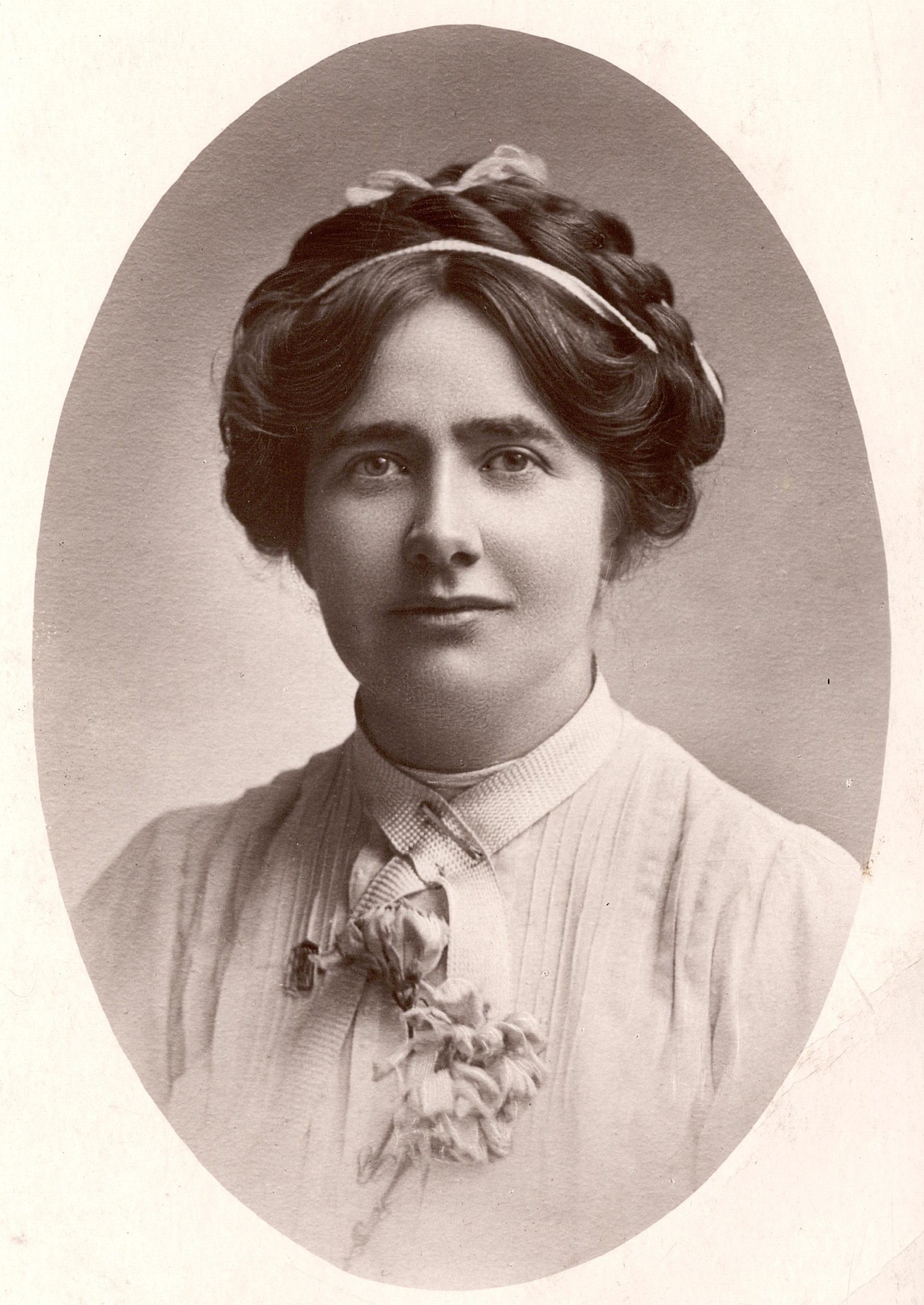 Teresa Billington-Greig1877–1964United Kingdom
Teresa Billington-Greig (15 October 1876 â 21 October 1964) was a British writer and suffragette who was one of the founders of the Women's Freedom League in 1907.
.jpg) Clara Codd1876–1971United Kingdom
Clara Codd1876–1971United KingdomClara Margaret Codd (10 October 1876 â 3 April 1971) was a British writer, suffragette, socialist feminist, and theosophist.