Russia · Krasnoselsky District
Lubyanka Building
Data is aggregated from public sources and may be incomplete or out of date. Always verify with primary sources before acting on any figure. See data sources.
For families
How to send mail, money, and visit Lubyanka Building
Step-by-step guidance using the Russia system — addresses, money services, visit booking, what to bring on your first visit.

Gallery
From Wikimedia Commons (CC-BY-SA where not otherwise stated).

Photo by Uwe Brodrecht via Wikimedia Commons (CC BY-SA 2.0)

Photo by Moscowjob.net via Wikimedia Commons (CC BY-SA 4.0)

Photo by Rakoon via Wikimedia Commons (CC0)

Photo by Rakoon via Wikimedia Commons (CC0)

Photo by Rakoon via Wikimedia Commons (CC0)

Photo by Rakoon via Wikimedia Commons (CC0)

Photo by Rakoon via Wikimedia Commons (CC0)

Photo by Brateevsky via Wikimedia Commons (CC BY-SA 4.0)
Lubyanka Building Headquarters of the FSB in Moscow, Russia _(Learn how and when to remove this message)_ | Lubyanka ( Russian: Лубянка, IPA:[\[lʊˈbʲankə\]](https://en.wikipedia.org/wiki/Help:IPA/Russian "Help:IPA/Russian")) is the popular name for the building which contains the headquarters of the FSB on Lubyanka Square[\[1\]](https://en.wikipedia.org/wiki/Lubyanka_Building#cite_note-1) in the Meshchansky District of Moscow, Russia. It is a large Neo-Baroque building with a facade of yellow brick designed by Alexander V. Ivanov in 1897 and augmented by Aleksey Shchusev from 1940 to 1947. It was previously the national headquarters of the KGB. Soviet hammer-and-sickles can still be seen on the building's facade.
Background
Lubyanka (Russian: ÐÑбÑнка, IPA: [lÊËbʲankÉ]) is the popular name for the building which contains the headquarters of the FSB on Lubyanka Square in the Meshchansky District of Moscow, Russia. It is a large Neo-Baroque building with a facade of yellow brick designed by Alexander V. Ivanov in 1897 and augmented by Aleksey Shchusev from 1940 to 1947. It was previously the national headquarters of the KGB. Soviet hammer-and-sickles can still be seen on the building's facade.
Source: Wikipedia article lead, CC-BY-SA.
Capacity
—
Current population
—
Occupancy
—
Year opened
1898
Operational
Figures from official sources · verified 3 Jul 2026 · methodology
Facility profile
Operator
—
Population held
Mixed/unknown
Opened
1898
Region
Krasnoselsky District
Security level
—
Death-row facility
No
Conditions
No conditions summary available yet.
Visiting
No visiting information available.
Mailing
No mailing information available.
Practical info
Contact the operator's website for inmate-specific procedures.
Known issues
No major issues documented in our database.
Notable inmates
 Nikolai Krestinsky1883–1938 · diplomat
 János Esterházy1901–1957 · politician
Count János Eszterházy (Hungarian: [ËjaËnoÊ ËÉstÉrhaËzi]; rarely Slovak: Ján Esterházi; March 14, 1901 â March 8, 1957) was a prominent politician of Hungarian ethnicity in inter-war Czechoslovakia and later in the First Slovak Republic.
 WÅadysÅaw KochaÅski1918–1980 · military officer
WÅadysÅaw KochaÅski (noms de guerre "Bomba" and "Wujek"; 7 November 1918 â 12 December 1980) was an infantry captain in the Polish Army during World War II.
 Gerrit van der Waals1920–1948 · resistance fighter
Gerrit Hendricus Maria van der Waals (24 April 1920 â 11 August 1948) was a Dutch officer of the Royal Netherlands East Indies Army and a member of the wartime resistance.
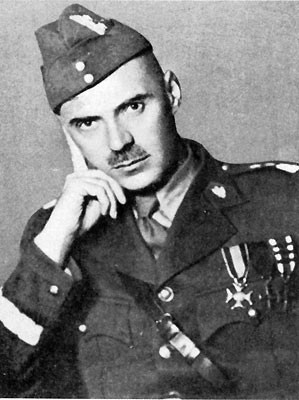 WÅadysÅaw Anders1892–1970 · military officer
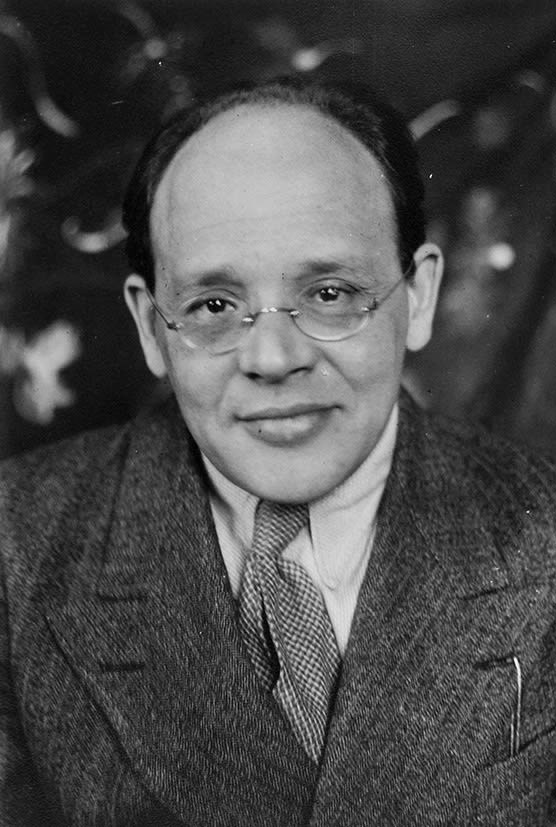
 Fritz Noether1884–1941 · mathematician
Fritz Alexander Ernst Noether (German: [ËnøËtÉ]; 7 October 1884 â 11 September 1941) was a German mathematician who emigrated from Nazi Germany to the Soviet Union.
 Raoul Wallenberg1912 · architect
Raoul Wallenberg (4 August 1912 â disappeared 17 January 1945) was a Swedish architect, businessman, diplomat, and humanitarian.
- Gerrit van der Waals1920–1948 · resistance fighter
Gerrit Hendricus Maria van der Waals (24 April 1920 â 11 August 1948) was a Dutch officer of the Royal Netherlands East Indies Army and a member of the wartime resistance.
Showing 9 of 12. Source: Wikidata + Wikipedia.
Contact & address
No public contact details available.
Conditions Risk Score
Derived signal — not a judgement. How it's calculated
Related facilities
Same country, matched on type + security level where possible.
- IK-3 'Polar Wolf'KharpSpecial regimeFederal penal colony
- Black Dolphin Prison (IK-6)Sol-IletskSupermaxFederal penal colony100% occupancy
- Karachev concentration campConcentration camp
- FKU «SIZO № 2 UFSIN Rossii po RK»Сосногорск , п. Лыаёльpretrial-detention
- Pivnichne Upravlinnia VTT ta budivnitstvo 503
- Budivnitstvo 510 i VTT
Data completeness
24%How many of our profile fields are populated. We surface this so families and researchers know the limits.
Sources
- Wikidata — Wikimedia Foundation
- Wikidata (Q646334)
- Wikipedia
- Wikimedia Commons
- See /data-sources for our overall methodology.
Cite this page
Under CC-BY-4.0. Include the URL and access date; the site is a living reference and entries can change.
World Prisons. (2026). Lubyanka Building. Retrieved October 20, 2026, from https://worldprisons.com/prisons/lubyanka-building
"Lubyanka Building." World Prisons. Accessed October 20, 2026. https://worldprisons.com/prisons/lubyanka-building.
@misc{worldprisons-lubyanka-building,
  author = {{World Prisons}},
  title = {Lubyanka Building},
  year = {2026},
  url = {https://worldprisons.com/prisons/lubyanka-building},
  urldate = {2026-10-20}
}