China · Lhasa
Drapchi Prison
Data is aggregated from public sources and may be incomplete or out of date. Always verify with primary sources before acting on any figure. See data sources.
For families
How to send mail, money, and visit Drapchi Prison
Step-by-step guidance using the China system — addresses, money services, visit booking, what to bring on your first visit.
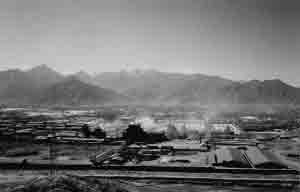
Gallery
From Wikimedia Commons (CC-BY-SA where not otherwise stated).
Photo by Blofeld of SPECTRE via Wikimedia Commons (Public domain)
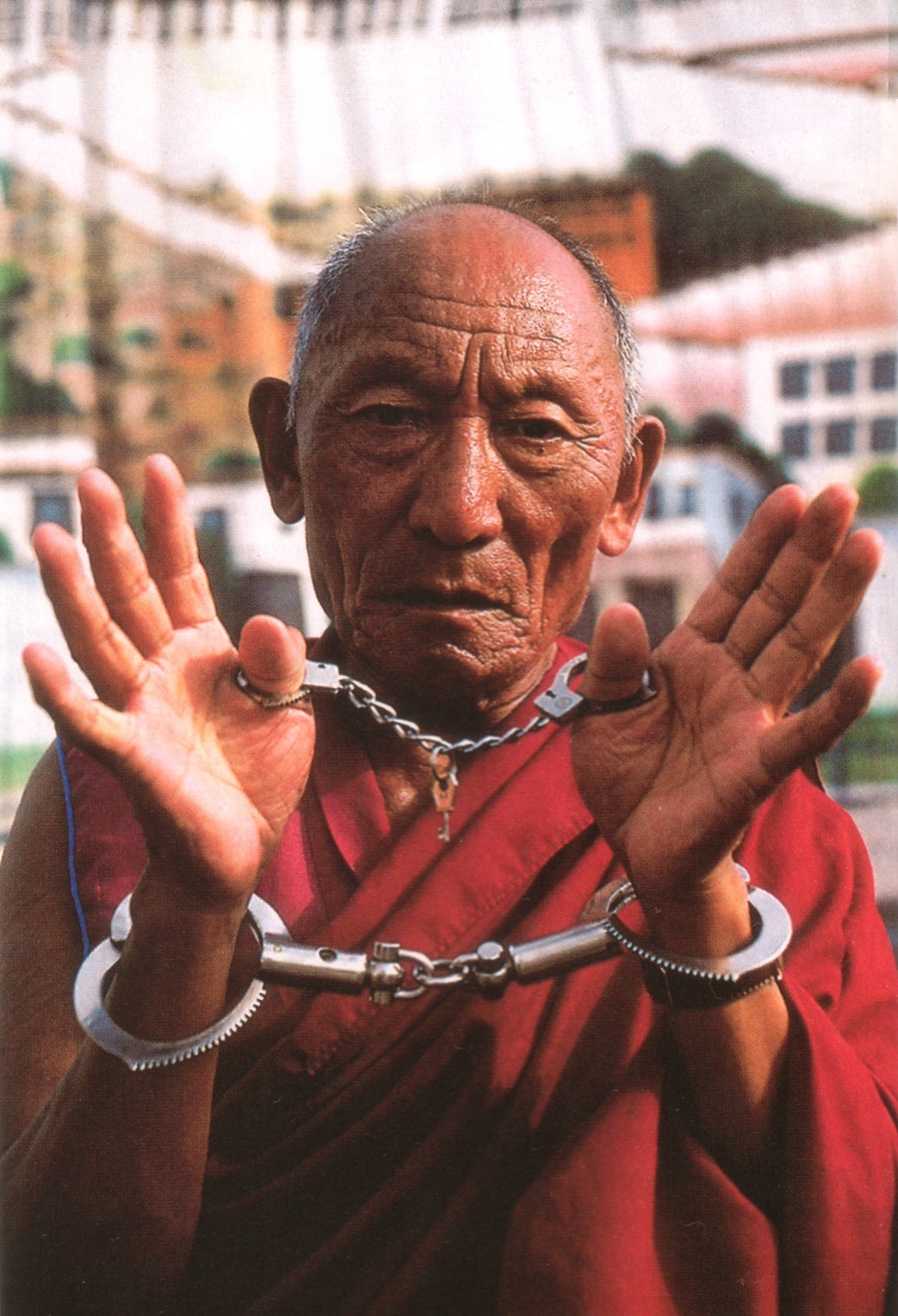
Photo by Christophe Cunniet via Wikimedia Commons (CC BY-SA 4.0)

Photo by Nick.Gulotta via Wikimedia Commons (CC BY 3.0)

Photo by Frederick Williamson (1891-1935) via Wikimedia Commons (Public domain)

Photo by Frederick Williamson (1891-1935) via Wikimedia Commons (Public domain)

Photo by Frederick Williamson (1891-1935) via Wikimedia Commons (Public domain)

Photo by Frederick Williamson (1891-1935) via Wikimedia Commons (Public domain)
Drapchi Prison, or Lhasa Prison No. 1 (Tibetan: གྲྭ་བཞི་, Wylie: grwa bzhi, lit. "four corners"; simplified Chinese: 拉萨第一监狱; traditional Chinese: 拉薩第一監獄), is the largest prison in Tibet, China, located in Lhasa. Drapchi is the Tibetan word, named after its location and was originally a military garrison until it was converted into a prison after the 1959 Tibetan Uprising. It is roughly one mile from the city centre and is the main prison for judicially sentenced prisoners in Tibet. It was the primary...
Background
Drapchi Prison, or Lhasa Prison No. 1 (Tibetan: à½à¾²à¾à¼à½à½à½²à¼, Wylie: grwa bzhi, lit. "four corners"; simplified Chinese: æè¨ç¬¬ä¸çç±; traditional Chinese: æè©ç¬¬ä¸ç£ç), is the largest prison in Tibet, China, located in Lhasa. Drapchi is the Tibetan word, named after its location and was originally a military garrison until it was converted into a prison after the 1959 Tibetan Uprising. It is roughly one mile from the city centre and is the main prison for judicially sentenced prisoners in Tibet.
Source: Wikipedia article lead, CC-BY-SA.
Capacity
—
Current population
—
Occupancy
—
Year opened
1965
Operational
Figures from official sources · verified 6 Jul 2026 · methodology
Facility profile
Operator
—
Population held
Mixed/unknown
Opened
1965
Region
Lhasa
Security level
—
Death-row facility
No
Conditions
No conditions summary available yet.
Visiting
No visiting information available.
Mailing
No mailing information available.
Practical info
Contact the operator's website for inmate-specific procedures.
Known issues
No major issues documented in our database.
Notable inmates
 Passang Lhamo1976 · singer
Passang Lhamo is a Tibetan nun, former political prisoner, activist. Lhamo, a Tibetan Buddhist, was ordained as a nun at age 14.
- Ngawang Sangdrol1977 · political activist
Ngawang Sangdrol (born in Lhasa, Tibet, in 1977) is a former political prisoner, imprisoned at the age of 13 by the Government of the People's Republic of China, for peacefully demonstrating against the Chinese occupation of Tibet in 1992.
- Ngawang Sangdrol1977 · political activist
Ngawang Sangdrol (born in Lhasa, Tibet, in 1977) is a former political prisoner, imprisoned at the age of 13 by the Government of the People's Republic of China, for peacefully demonstrating against the Chinese occupation of Tibet in 1992.
Source: Wikidata + Wikipedia.
Contact & address
No public contact details available.
Conditions Risk Score
Derived signal — not a judgement. How it's calculated
Related facilities
Same country, matched on type + security level where possible.
- Qincheng PrisonBeijingMaximumMinistry of Public Security
- Tilanqiao PrisonShanghaiMaximumProvincial
- Meizhou Prison
- Chong Zhou Jian Yu
- Heng Tie Gong An Kan Shou Suo
- Baiyin Prison
Data completeness
24%How many of our profile fields are populated. We surface this so families and researchers know the limits.
Sources
- Drapchi Prison — Wikipedia
- Category: Prisons in China -- Wikipedia — Wikipedia
- Wikipedia — Wikimedia Foundation
- Wikidata — Wikimedia Foundation
- Wikidata (Q2977798)
- Wikipedia
- Wikimedia Commons
- See /data-sources for our overall methodology.
Cite this page
Under CC-BY-4.0. Include the URL and access date; the site is a living reference and entries can change.
World Prisons. (2026). Drapchi Prison. Retrieved October 20, 2026, from https://worldprisons.com/prisons/drapchi-prison
"Drapchi Prison." World Prisons. Accessed October 20, 2026. https://worldprisons.com/prisons/drapchi-prison.
@misc{worldprisons-drapchi-prison,
  author = {{World Prisons}},
  title = {Drapchi Prison},
  year = {2026},
  url = {https://worldprisons.com/prisons/drapchi-prison},
  urldate = {2026-10-20}
}