India · Srivijayapuram
Cellular Jail
Data is aggregated from public sources and may be incomplete or out of date. Always verify with primary sources before acting on any figure. See data sources.
For families
How to send mail, money, and visit Cellular Jail
Step-by-step guidance using the India system — addresses, money services, visit booking, what to bring on your first visit.

Gallery
From Wikimedia Commons (CC-BY-SA where not otherwise stated).

Photo by Mainaksinghabarma via Wikimedia Commons (CC BY-SA 4.0)
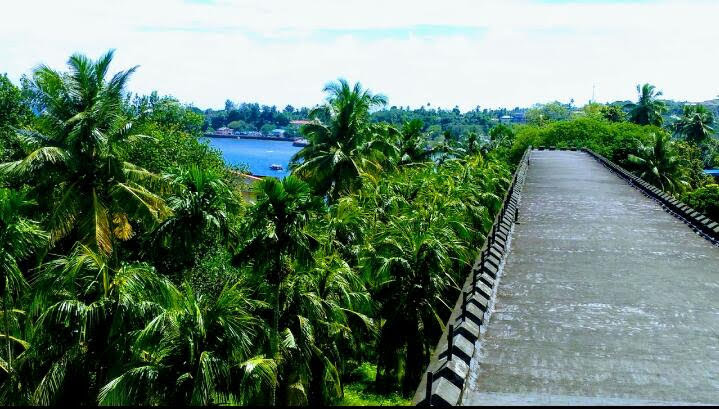
Photo by Precious001412 via Wikimedia Commons (CC BY-SA 4.0)

Photo by Durgadattc via Wikimedia Commons (CC BY-SA 4.0)

Photo by Aniket Khadilkar via Wikimedia Commons (CC BY-SA 4.0)

Photo by Siddharth2k8 via Wikimedia Commons (CC BY 4.0)

Photo by à®à®¸à¯. பி. à®à®¿à®°à¯à®·à¯à®£à®®à¯à®°à¯à®¤à¯à®¤à®¿ at Tamil Wikipedia via Wikimedia Commons (Public domain)

Photo by Biswarup Ganguly via Wikimedia Commons (CC BY-SA 3.0)

Photo by Hussain nellikkal via Wikimedia Commons (CC0)
British colonial prison in modern day India For other uses, see [Kala Pani (disambiguation) "Kala Pani (disambiguation)"). Cellular Jail The Cellular Jail, also known as ' _Kālā Pānī'_ (transl.'Black Water'), is a former British colonial prison in the Andaman and Nicobar Islands. The prison was used by the colonial government of India for the purpose of exiling insurgents and political prisoners. Many notable independence activists were imprisoned there during the struggle for India's independence.[\[2\]](https://en.wikipedia.org/wiki/Cellular_Jail#cite_note-2) Today, the complex serves as a national memorial monument.[\[3\]](https://en.wikipedia.org/wiki/Cellular_Jail#cite_note-3) Originally built with seven wings, the building suffered extensive damage during the earthquake of 1941.[\[4\]](https://en.wikipedia.org/wiki/Cellular_Jail#cite_note-4) Later, two wings were dismantled during the Second World War by the Japanese, who repurposed the bricks for constructing bunkers and other structures. After India gained independence, two more wings were demolished in the 1950s to make way for the nearby Govind Ballabh Pant Hospital.
Background
The Cellular Jail, also known as 'KÄlÄ PÄnÄ«' (transl.â'Black Water'), is a former British colonial prison in the Andaman and Nicobar Islands. The prison was used by the colonial government of India for the purpose of exiling insurgents and political prisoners. Many notable independence activists were imprisoned there during the struggle for India's independence. Today, the complex serves as a national memorial monument. Originally built with seven wings, the building suffered extensive damage during the earthquake of 1941.
Source: Wikipedia article lead, CC-BY-SA.
Capacity
—
Current population
—
Occupancy
—
Year opened
1906
Operational
Figures from official sources · verified 3 Jul 2026 · methodology
Facility profile
Operator
—
Population held
Mixed/unknown
Opened
1906
Region
Srivijayapuram
Security level
High-security
Death-row facility
No
Conditions
No conditions summary available yet.
Visiting
No visiting information available.
Mailing
No mailing information available.
Practical info
Contact the operator's website for inmate-specific procedures.
Known issues
No major issues documented in our database.
Notable inmates
 Ullaskar Dutta1885–1965 · revolutionary
Ullaskar Dutta (16 April 1885 â 17 May 1965) was an Indian revolutionary associated with Anushilan Samiti and Jugantar of Bengal, and was a close associate of Barindra Ghosh.
 Sohan Singh Bhakna1870–1968 · politician
Baba Sohan Singh Bhakna (4 January 1870 â 20 December 1968) was an Indian revolutionary, the founding president of the Ghadar Party, and a leading member of the party involved in the Ghadar Conspiracy of 1915.
 Hemchandra Kanungo1871–1950 · politician
Hemchandra Das Kanungo (4 August 1871 â 8 April 1951) was an Indian nationalist and a member of the Anushilan Samiti.
 Barindra Kumar Ghosh1880–1959 · author
Barindra Kumar Ghosh or Barindra Ghosh, or popularly Barin Ghosh (5 January 1880 â 18 April 1959), was an Indian Bengali revolutionary and journalist.
- Hemchandra Kanungo1871–1950 · politician
Hemchandra Das Kanungo (4 August 1871 â 8 April 1951) was an Indian nationalist and a member of the Anushilan Samiti.
 Vinayak Damodar Savarkar1883–1966 · poet
Vinayak Damodar Savarkar (28 May 1883 â 26 February 1966) popularly called Veer Savarkar, was an Indian politician and ideologue.
 Subodh Roy1916–2006 · politician
Subodh Roy (1915 â 26 August 2006) (also known as Jhunku Roy) was an Indian revolutionary socialist who was influential in the Indian independence movement, and a politician.
Source: Wikidata + Wikipedia.
Contact & address
Conditions Risk Score
Derived signal — not a judgement. How it's calculated
Related facilities
Same country, matched on type + security level where possible.
- Tihar JailNew DelhiHighState180% occupancy
- Chandrapur District PrisonChandrapurDistrict prison
- Sub JailMuvattupuzha
- Sub Jail ChhabraChhabraSub Jail
- Bolpur Sub Correctional HomeSub-correctional home
- Tamluk Sub Correctional HomeSub-correctional home
Data completeness
36%How many of our profile fields are populated. We surface this so families and researchers know the limits.
Sources
- Wikipedia — Wikimedia Foundation
- Wikidata — Wikimedia Foundation
- Wikidata (Q3345501)
- Wikipedia
- Wikimedia Commons
- See /data-sources for our overall methodology.
Cite this page
Under CC-BY-4.0. Include the URL and access date; the site is a living reference and entries can change.
World Prisons. (2026). Cellular Jail. Retrieved October 20, 2026, from https://worldprisons.com/prisons/cellular-jail
"Cellular Jail." World Prisons. Accessed October 20, 2026. https://worldprisons.com/prisons/cellular-jail.
@misc{worldprisons-cellular-jail,
  author = {{World Prisons}},
  title = {Cellular Jail},
  year = {2026},
  url = {https://worldprisons.com/prisons/cellular-jail},
  urldate = {2026-10-20}
}