Bulgaria · Ðелене
Belene labour camp
Data is aggregated from public sources and may be incomplete or out of date. Always verify with primary sources before acting on any figure. See data sources.
For families
How to send mail, money, and visit Belene labour camp
Step-by-step guidance using the Bulgaria system — addresses, money services, visit booking, what to bring on your first visit.

Background
The Belene labour camp, also referred to as Belene concentration camp, was part of the network of forced labour camps in Communist Bulgaria. It was located on the Belene Island, between two branches of the Danube river. At the height of Valko Chervenkov's repressions in 1952, the camp had 2,323 inmates - 2,248 men and 75 women. The Belene Prison is still operating as a penitentiary in the western part of the island, while the eastern part is a managed natural reserve. This camp operated officially from 1949 to 1959, though a break in deportations to Belene occurred from 1954 to 1956.
Source: Wikipedia article lead, CC-BY-SA.
Capacity
—
Current population
—
Occupancy
—
Year opened
1949
Operational
Figures from official sources · verified 28 May 2026 · methodology
Facility profile
Population held
Mixed/unknown
Opened
1949
Region
Ðелене
Security level
—
Death-row facility
No
Conditions
No conditions summary available yet.
Visiting
No visiting information available.
Mailing
No mailing information available.
Practical info
Contact the operator's website for inmate-specific procedures.
Known issues
No major issues documented in our database.
Notable inmates
 Kitan Iliev1909–1997 · activist
 Dimitar Harizanov? · activist
 Ivan Chakrski1888–1981 · activist
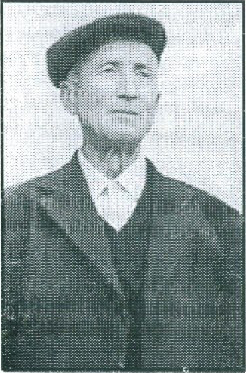 Ferdinand Ivanov1918–1997 · activist
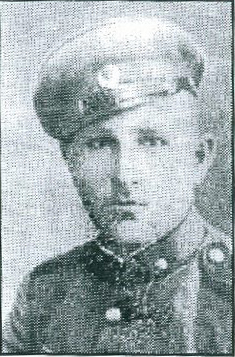 Slaveyko Ivanov1916–1959 · activist
 Dimitar Chikov1913–1993 · activist
- Yordan Angelov1925 · combatant
Source: Wikidata + Wikipedia.
Contact & address
Conditions Risk Score
Derived signal — not a judgement. How it's calculated
Related facilities
Same country, matched on type + security level where possible.
Data completeness
34%How many of our profile fields are populated. We surface this so families and researchers know the limits.
Sources
- Wikipedia — Wikimedia Foundation
- OpenStreetMap — OpenStreetMap Contributors
- Wikidata — Wikimedia Foundation
- Wikidata (Q815391)
- Wikipedia
- See /data-sources for our overall methodology.
Cite this page
Under CC-BY-4.0. Include the URL and access date; the site is a living reference and entries can change.
World Prisons. (2026). Belene labour camp. Retrieved October 14, 2026, from https://worldprisons.com/prisons/belene-labour-camp
"Belene labour camp." World Prisons. Accessed October 14, 2026. https://worldprisons.com/prisons/belene-labour-camp.
@misc{worldprisons-belene-labour-camp,
  author = {{World Prisons}},
  title = {Belene labour camp},
  year = {2026},
  url = {https://worldprisons.com/prisons/belene-labour-camp},
  urldate = {2026-10-14}
}