Banjica concentration camp
Data is aggregated from public sources and may be incomplete or out of date. Always verify with primary sources before acting on any figure. See data sources.
For families
How to send mail, money, and visit Banjica concentration camp
Step-by-step guidance using the Serbia system — addresses, money services, visit booking, what to bring on your first visit.

Gallery
From Wikimedia Commons (CC-BY-SA where not otherwise stated).

Photo by Unknown authorUnknown author via Wikimedia Commons (Public domain)

Photo by Unknown authorUnknown author via Wikimedia Commons (Public domain)

Photo by Unknown authorUnknown author via Wikimedia Commons (Public domain)
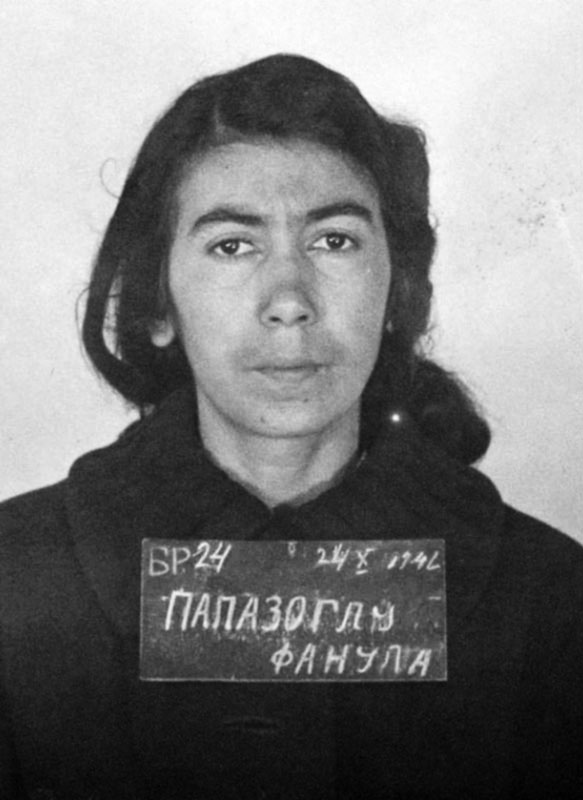
Photo by Unknown authorUnknown author via Wikimedia Commons (Public domain)

Photo by Unknown authorUnknown author via Wikimedia Commons (Public domain)

Photo by Unknown authorUnknown author via Wikimedia Commons (Public domain)

Photo by Stevan Bodnarov via Wikimedia Commons (Public domain)

Photo by JerkoâDorbiÄ via Wikimedia Commons (Public domain)
Background
The Banjica concentration camp (German: KZ Banjica, Serbian: ÐаÑиÑки логоÑ, BanjiÄki logor) was a Nazi German concentration camp in the Territory of the Military Commander in Serbia, the military administration of the Third Reich established after the Invasion and occupation of Yugoslavia during World War II. In response to escalating resistance, the German army instituted severe repressive measures â mass executions of civilian hostages and the establishment of concentration camps. Located in the Banjica neighborhood of Dedinjeâa suburb of Belgradeâit was originally used by the Germans as a center for holding hostages. The camp was later used to hold anti-fascist Serbs, Jews, Romani people, captured Partisans, Chetniks and other opponents of Nazi Germany. By 1942, most executions occurred at the firing ranges at Jajinci, Marinkova Bara and the Jewish cemetery. Banjica was operational from July 1941 to October 1944.
Source: Wikipedia article lead, CC-BY-SA.
Capacity
—
Current population
—
Occupancy
—
Year opened
—
Operational
Figures from official sources · verified 16 Jun 2026 · methodology
Facility profile
Operator
—
Population held
Mixed/unknown
Opened
—
Region
—
Security level
—
Death-row facility
No
Conditions
No conditions summary available yet.
Visiting
No visiting information available.
Mailing
No mailing information available.
Practical info
Contact the operator's website for inmate-specific procedures.
Known issues
No major issues documented in our database.
Notable inmates
.jpg) Milutin IvkoviÄ1906–1943 · association football player
Milutin IvkoviÄ1906–1943 · association football player- Viktor Novak1889–1977 · historian
Viktor Novak (4 February 1889 â 1 January 1977) was a Yugoslav Croat historian, professor at the University of Belgrade and full member of the Serbian Academy of Sciences and Arts (SANU), and a corresponding member of the Yugoslav Academy of Sciences and Arts (JAZU).
 Äuka DiniÄ1914–1943 · resistance fighter
_portrait.jpg)
 Vukica MitroviÄ1911–1941 · resistance fighter
Vukica MitroviÄ Å unja (1912â1941) was a communist, revolutionary and national hero of SFR Yugoslavia.
 Olga Alkalaj1907–1942 · lawyer
Olga Alkalaj (23 November 1907 â 15 March 1942) was a Yugoslav lawyer, activist for women's rights and a member of the Yugoslav Partisans during World War II.
 Janko JankoviÄ1909–1944 · police officer
 Vlastimir PavloviÄ Carevac1895–1965 · violinist
Vlastimir PavloviÄ Carevac (Serbian Cyrillic: ÐлаÑÑÐ¸Ð¼Ð¸Ñ ÐÐ°Ð²Ð»Ð¾Ð²Ð¸Ñ Ð¦Ð°ÑеваÑ; 9 October 1895 â 10 January 1965) was a Serbian violinist and conductor, and founder and director of the National Orchestra of Radio Belgrade.
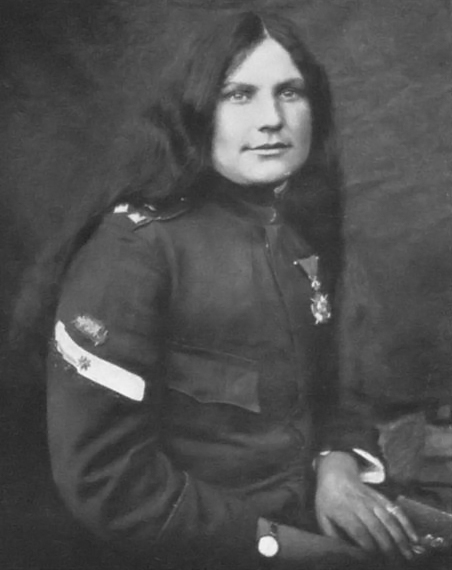 Milunka SaviÄ1890–1973 · military personnel
Milunka SaviÄ CMG (Serbian Cyrillic: ÐилÑнка СавиÑ; 28 June 1892 â 5 October 1973) was a Serbian war heroine who fought in the Balkan Wars and in World War I.
Showing 9 of 12. Source: Wikidata + Wikipedia.
Contact & address
Conditions Risk Score
Derived signal — not a judgement. How it's calculated
Related facilities
Same country, matched on type + security level where possible.
- Crveni Krst concentration campConcentration camp
- Šabac concentration campConcentration camp
- Topolya concentration campConcentration camp
- Smederevska Palanka concentration campConcentration camp
- Újvidék concentration campConcentration camp
- Pancsova concentration campConcentration camp
Data completeness
28%How many of our profile fields are populated. We surface this so families and researchers know the limits.
Sources
- EHRI Authority Record
- Wikidata entity
- Wikipedia — Wikimedia Foundation
- Wikidata — Wikimedia Foundation
- EHRI Authority List of Camps and Ghettos / USHMM Encyclopedia of Camps and Ghettos — European Holocaust Research Infrastructure (EHRI) / United States Holocaust Memorial Museum (USHMM)
- Wikidata (Q698270)
- Wikipedia
- Wikimedia Commons
- See /data-sources for our overall methodology.
Cite this page
Under CC-BY-4.0. Include the URL and access date; the site is a living reference and entries can change.
World Prisons. (2026). Banjica concentration camp. Retrieved October 15, 2026, from https://worldprisons.com/prisons/banjica-concentration-camp
"Banjica concentration camp." World Prisons. Accessed October 15, 2026. https://worldprisons.com/prisons/banjica-concentration-camp.
@misc{worldprisons-banjica-concentration-camp,
  author = {{World Prisons}},
  title = {Banjica concentration camp},
  year = {2026},
  url = {https://worldprisons.com/prisons/banjica-concentration-camp},
  urldate = {2026-10-15}
}