All persons.jpg)
Yuriy Lutsenko
1964
- Nationality
- Soviet Union
- Occupation
- politician
Incarceration history
Facilities
- Lukyanivska PrisonDates unknown
Biography
Yuriy Vitaliyovych Lutsenko (Ukrainian: ЮÑÑй ÐÑÑалÑÐ¹Ð¾Ð²Ð¸Ñ ÐÑÑенко; born 14 December 1964) is a Ukrainian politician, who served as Interior Minister and entered the Armed Forces during the Russian invasion of Ukraine. His most recent position was Prosecutor General of Ukraine (from 12 May 2016 until 29 August 2019). Lutsenko has been a long serving people's deputy in the Verkhovna Rada (the Ukrainian parliament); first elected in 2002 and reelected in 2007 and 2014. Lutsenko was Minister of Internal Affairs in the two cabinets of Yulia Tymoshenko and in the cabinets of Yuriy Yekhanurov and Viktor Yanukovych. The Ministry of Internal Affairs is the Ukrainian police authority, and Lutsenko became the first civilian minister in February 2005. Lutsenko is also a former leader of the Petro Poroshenko Bloc, and a former leader of its faction in the Verkhovna Rada (Ukrainian parliament). In 2010, Lutsenko was charged with abuse of office and forgery by Prosecutor General of Ukraine Viktor Pshonka, in what was widely viewed as political retaliation for having investigated one of Yanukovych's cabinet members four years earlier. In 2012, he was sentenced to four years in prison, but was pardoned by Yanukovych in 2013. In 2016, he became Ukraine's chief prosecutor under President Petro Poroshenko, during which time he was criticized for undermining Ukraine's newly established National Anti-Corruption Bureau. While in office, Lutsenko became a central figure in the TrumpâUkraine scandal, in which he worked with U.S. President Donald Trump to try to find incriminating information on Trump's then-presumed opponent in the 2020 United States presidential election, Joe Biden. He was dismissed by President Volodymyr Zelenskyy in 2019; Trump later tried unsuccessfully to pressure Zelenskyy to reinstate him. Following the February 2022 Russian invasion of Ukraine Lutsenko joined the Armed Forces of Ukraine and has taken part in several battles since. On 5 July 2023 Lutsenko announced that he would no longer serve in the Ukrainian Armed Forces due to an established disability. According to him, he would "work towards victory as a volunteer".
Related people
Same nationality and era where possible; falls back to shared nationality or era.
- Valery Skoptsov1951–2004Soviet Union
- Mikhail Makarov1962–1988Soviet Union
Mikhail Olegovich Makarov (Russian: ÐÐ¸Ñ Ð°Ð¸Ìл ÐлеÌÐ³Ð¾Ð²Ð¸Ñ ÐакаÌÑов; 12 March 1962 â 1988), known as The Executioner (Russian: ÐалаÑ), was a Soviet serial killer, who from February to May 1986 committed three murders and one attempted murder in Leningrad.
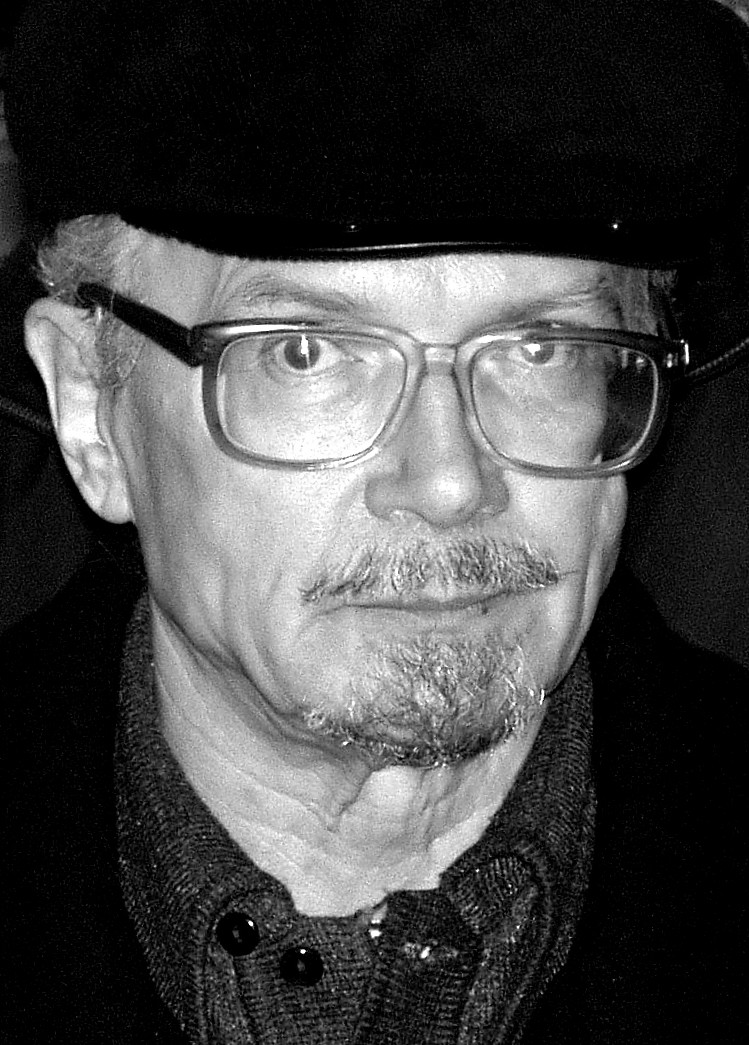 Eduard Limonov1943–2020Soviet Union
Eduard Veniaminovich Limonov (né Savenko; 22 February 1943 â 17 March 2020) was a Russian writer, poet, publicist, political dissident and politician. He emigrated from the Soviet Union in 1974, but returned to Russia in 1991, where he founded the National Bolshevik Party.
 Roman Sushchenko1969Soviet Union
Roman Volodymyrovych Sushchenko (Ukrainian: Роман ÐолодимиÑÐ¾Ð²Ð¸Ñ Ð¡ÑÑенко, born 8 February 1969) is a Ukrainian journalist and artist.
- Pavel Shuvalov1968–2020Soviet Union
Pavel Alekseyevich Shuvalov (Russian: ÐаÌвел ÐлекÑеÌÐµÐ²Ð¸Ñ Ð¨ÑваÌлов; 1 March 1968 â 11 March 2021), known as the Nevsky Forest Park Maniac (Russian: ÐанÑÑк из ÐевÑкого леÑопаÑка), was a Soviet-Russian serial killer who killed 3 children between 1991 and 1995. .
 Mikhail Khodorkovsky1963Soviet Union
Mikhail Borisovich Khodorkovsky (Russian: ÐÐ¸Ñ Ð°Ð¸Ð» ÐоÑиÑÐ¾Ð²Ð¸Ñ Ð¥Ð¾Ð´Ð¾ÑковÑкий, IPA: [mʲɪxÉËil xÉdÉrËkofskʲɪj]; born 26 June 1963), sometimes known by his initials MBK, is an exiled Russian businessman, oligarch, and opposition activist, now residing in London.