
Vladimir Lenin
1870–1924
- Nationality
- Russian Empire
- Occupation
- politician
Vladimir Ilyich Ulyanov (22 April [O.S.
Incarceration history
Facilities
- Pre-trial detention prison №3Dates unknown
Biography
Vladimir Ilyich Ulyanov (22 April [O.S. 10 April] 1870 â 21 January 1924), better known as Vladimir Lenin, was a Russian revolutionary, politician and political theorist. He was the first head of government of Soviet Russia from 1917 then of the Soviet Union from 1922 until his death in 1924. As the Bolsheviks' founder, Lenin led the October Revolution, which established the world's first communist state. His government won the Russian Civil War and created a one-party state under the Communist Party. Ideologically a Marxist, his developments to the ideology are called Leninism. Lenin embraced revolutionary socialist politics after his brother was executed in 1887 for plotting to assassinate Tsar Alexander III. He was expelled from Kazan Imperial University for participating in student protests, and earned a law degree before moving to Saint Petersburg in 1893 and becoming a prominent Marxist activist. In 1897, Lenin was exiled to Siberia for three years, after which he moved to Western Europe, including Switzerland, and became a leading figure in the Russian Social Democratic Labour Party. In 1903, the party split between Lenin's Bolshevik faction and the Mensheviks, with Lenin advocating for a vanguard party to lead the proletariat in establishing socialism. Lenin briefly returned to Russia during the Revolution of 1905. During the First World War, he campaigned for its transformation into a Europe-wide proletarian revolution. After the February Revolution of 1917 ousted Tsar Nicholas II, Lenin returned to Russia and played a leading role in the October Revolution. Lenin's government abolished private ownership of land, nationalised major industry and banks, withdrew from the war by signing the Treaty of Brest-Litovsk and promoted world revolution through the Communist International. The Bolsheviks initially shared power with the Left Socialist-Revolutionaries, but during the civil war, they centralised power in the Communist Party and suppressed opposition in the Red Terror, in which tens of thousands were killed or imprisoned. Responding to famine and popular uprisings, Lenin reversed his policy of war communism in 1921 and stabilised the economy with the New Economic Policy. The Red Army defeated numerous anti-Bolshevik and separatist armies in the civil war, after which some of the non-Russian nations which had broken away from the empire were reunited in the Soviet Union in 1922; others, notably Poland, gained independence. Lenin suffered three debilitating strokes in 1922 and 1923 before his death in 1924, beginning a power struggle which ended in Joseph Stalin's rise to power. Lenin was the posthumous subject of a pervasive personality cult within the Soviet Union until its dissolution in 1991. Under Stalin, he became an ideological figurehead of MarxismâLeninism and a prominent influence over the international communist movement. A controversial and highly divisive figure, Lenin is praised by his supporters for establishing a revolutionary government which took steps towards socialism, anti-imperialism, social reforms and workers' control, while his critics condemn him for establishing a dictatorship which oversaw mass killings and political repression. He is widely considered one of the most significant figures of the 20th century.
Related people
Same nationality and era where possible; falls back to shared nationality or era.
- UladzislaÅ PaÅliukoÅski1895–1955Russian Empire
 Vladimir Kotulsky1879–1951Russian Empire
 Aron Baron1891–1937Russian Empire
Aron Davydovych Baron (Ukrainian: ÐÑоÌн ÐавиÌÐ´Ð¾Ð²Ð¸Ñ ÐаÌÑон; 1891â1937) was a Ukrainian Jewish anarchist revolutionary.
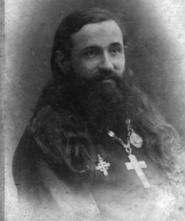 Alexander Glagolev1872–1937Russian Empire
Alexander Alexandrovich Glagolev (Ukrainian: ÐлекÑÐ°Ð½Ð´Ñ ÐлекÑандÑÐ¾Ð²Ð¸Ñ ÐлаголÑв, Russian: ÐлекÑаÌÐ½Ð´Ñ ÐлекÑаÌндÑÐ¾Ð²Ð¸Ñ ÐлагоÌлев; 14 February 1872 â 25 November 1937) was a Russian Orthodox priest and religious philosopher as well as professor of the Kiev Theological Seminary.
- Julius Jacob Hammer1874–1948Russian Empire
- Pati Kremer1867–1943Russian Empire
Pati Kremer (1867â1943) was a Russian revolutionary socialist and pioneer of the General Jewish Workers' Union in Lithuania, Poland and Russia (Bund).