All persons
Nobusuke Kishi
1896–1987
- Nationality
- Japan
- Occupation
- politician
Nobusuke Kishi (岸 ä¿¡ä», Kishi Nobusuke; 13 November 1896 â 7 August 1987) was a Japanese bureaucrat and politician who served as prime minister of Japan from 1957 to 1960.
Incarceration history
Facilities
- Sugamo PrisonDates unknown
Biography
Nobusuke Kishi (岸 ä¿¡ä», Kishi Nobusuke; 13 November 1896 â 7 August 1987) was a Japanese bureaucrat and politician who served as prime minister of Japan from 1957 to 1960. As a prominent reform bureaucrat, he directed the exploitative economic management of the Japanese puppet state of Manchukuo in China in the 1930s, and later served in the wartime cabinet. Following World War II, he was imprisoned as a suspected war criminal. After his release, he helped found the Liberal Democratic Party. As Prime Minister, Kishi forcefully revised the U.S.âJapan Security Treaty, but was compelled to resign following the massive Anpo protests the unpopular treaty had provoked. For his behind-the-scenes role in numerous important events, Kishi retrospectively received the nickname "YÅkai of the ShÅwa era" (æåã®å¦æª; ShÅwa no yÅkai). Kishi was the founder of the SatÅâKishiâAbe dynasty in Japanese politics, with his younger brother Eisaku SatÅ and his grandson Shinzo Abe both later serving as prime ministers of Japan. Born in Yamaguchi Prefecture, Kishi graduated from Tokyo Imperial University in 1920. He rose through the ranks at the Ministry of Commerce and Industry, and during the 1930s led the industrial development of Manchukuo, where he exploited Chinese slave labor. Kishi served in the wartime cabinet of Hideki TÅjÅ as minister of commerce and industry from 1941 to 1943 and vice minister of munitions from 1943 to 1944. At the end of the war in 1945, Kishi was imprisoned as a suspected Class A war criminal, but U.S. occupation authorities did not charge, try, or convict him, and released him in 1948 during the Reverse Course. At the end of the occupation in 1952, Kishi was de-purged, enabling his election to the National Diet in 1953. With overt and covert U.S. support, he consolidated Japanese conservatives against perceived threats from the Japan Socialist Party, and in 1955 was instrumental in forming the Liberal Democratic Party (LDP). Kishi was thus key in establishing the "1955 System" under which the LDP remains Japan's dominant party. Kishi served as the first secretary-general of the LDP and as foreign minister under Prime Minister Tanzan Ishibashi before succeeding Ishibashi in 1957. During his tenure, Kishi had the strong backing of business, and promoted domestic industry and commercial interests in Southeast Asia. In 1958, he introduced a bill which would have granted police vastly expanded powers, but withdrew it under heavy opposition. Kishi's mishandling of the 1960 revision of the U.S.âJapan Security Treaty led to the Anpo protests, the largest protests in Japan's modern history, and he resigned in disgrace. He remained a member of the House of Representatives until 1979 as a staunch anti-communist and conservative with links to right-wing groups.
Related people
Same nationality and era where possible; falls back to shared nationality or era.
- Miyagi Yotoku1903–1943Japan
Yotoku Miyagi (å®®å ä¸å¾³, Miyagi Yotoku; 1903â1943) was an Okinawan Marxist artist, Communist Party USA member, and a member of Richard Sorge's spy ring. .
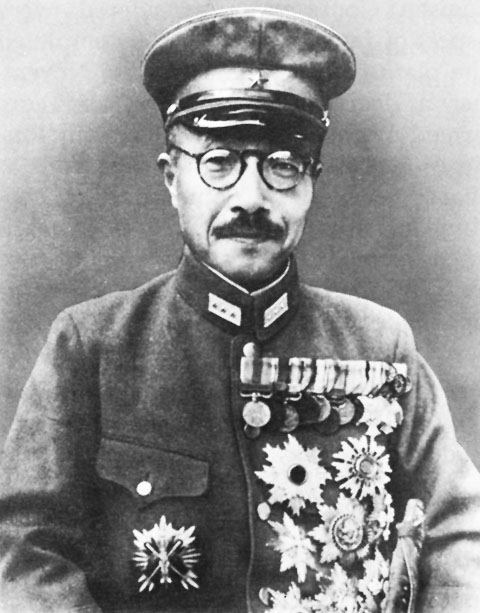 Hideki Tojo1884–1948Japan
Hideki Tojo (30 December 1884 â 23 December 1948) was a Japanese military officer and politician who served as Prime Minister of Japan from 1941 to 1944 during World War II.
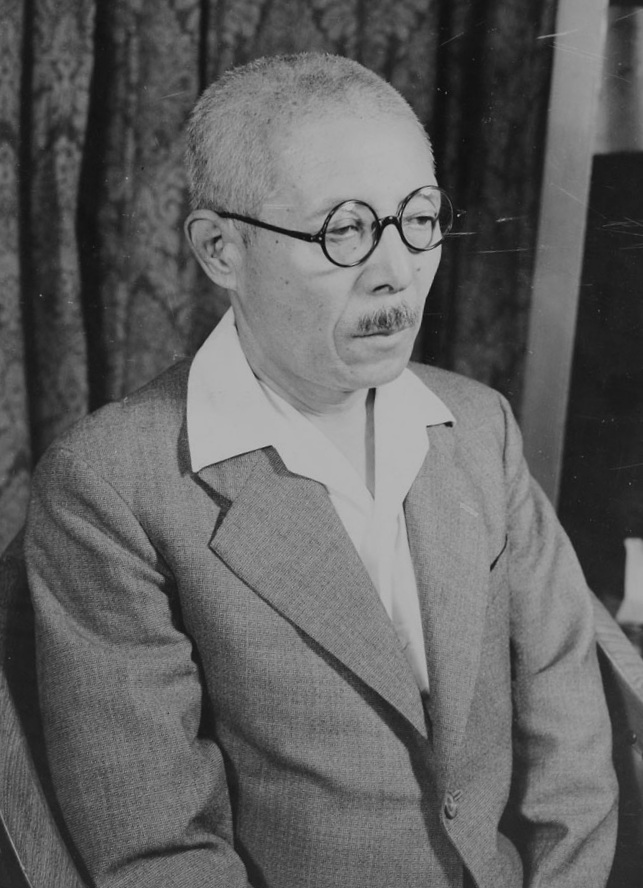 HeitarÅ Kimura1888–1948Japan
HeitarÅ Kimura (æ¨æ å µå¤ªé, Kimura HeitarÅ (sometimes Kimura HyÅtarÅ); 28 September 1888 â 23 December 1948) was a general in the Imperial Japanese Army.
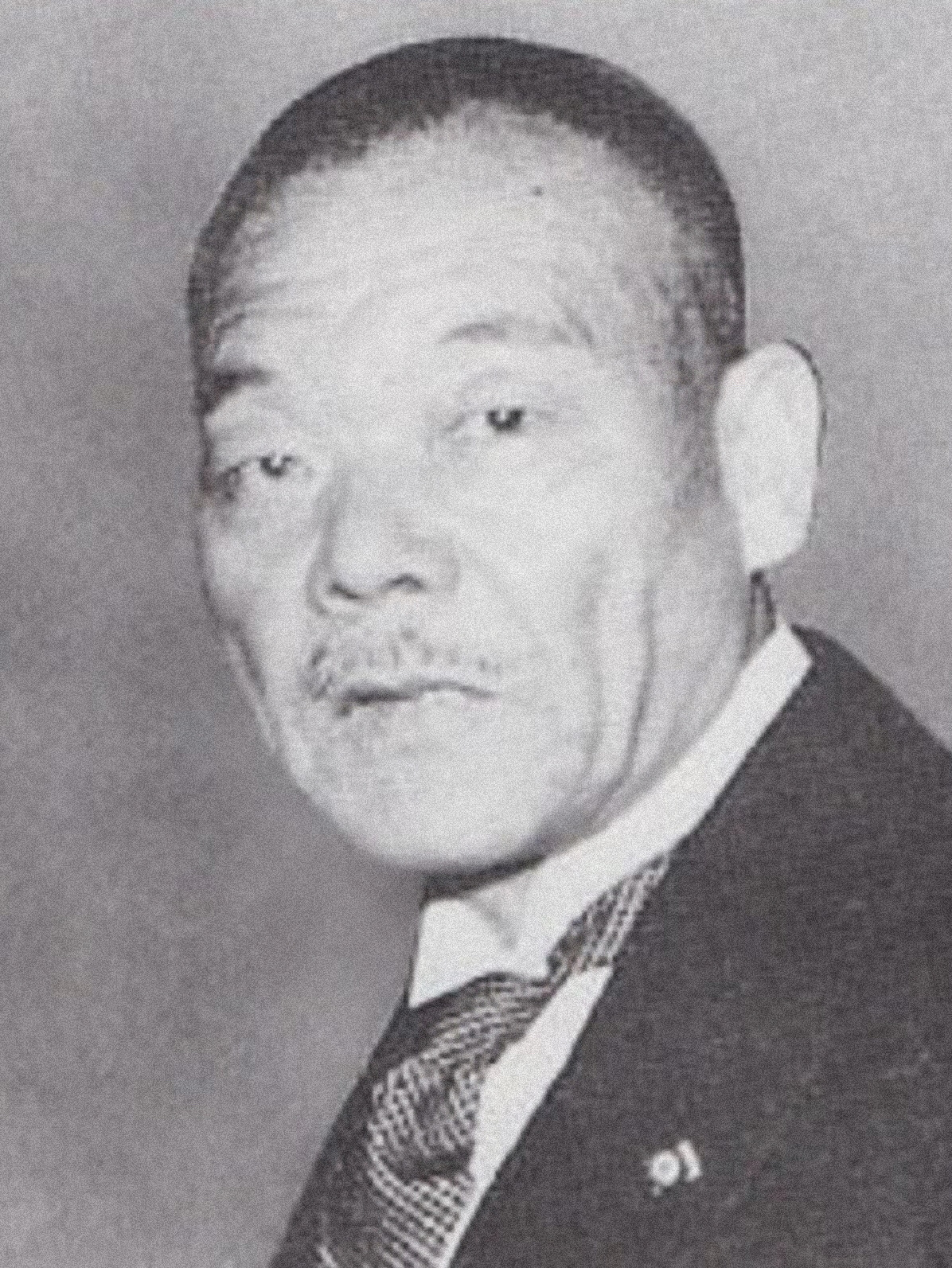 Kuniaki Koiso1880–1950Japan
Kuniaki Koiso (å°ç£¯ åæ, Koiso Kuniaki; 22 March 1880 â 3 November 1950) was a Japanese politician and general who served as prime minister of Japan from 1944 to 1945, during World War II.
- Yasuji Kaneko1920–2010Japan
Yasuji Kaneko (éå å®æ¬¡, Kaneko Yasuji; January 28, 1920 â November 25, 2010) was an ex-soldier of the Imperial Japanese Army, and a former detainee of both Siberian Internment by the Soviet Union during 1945â1950 and Fushun War Criminals Management Centre in China during 1950â1956.
 KisaburÅ AndÅ1874–1954Japan
KisaburÅ AndÅ (å®è¤ ç´ä¸é, AndÅ KisaburÅ; 11 February 1874 â 10 May 1954) was a career officer and lieutenant general in the Imperial Japanese Army, who served as a politician and cabinet minister in the government of the Empire of Japan during World War II.