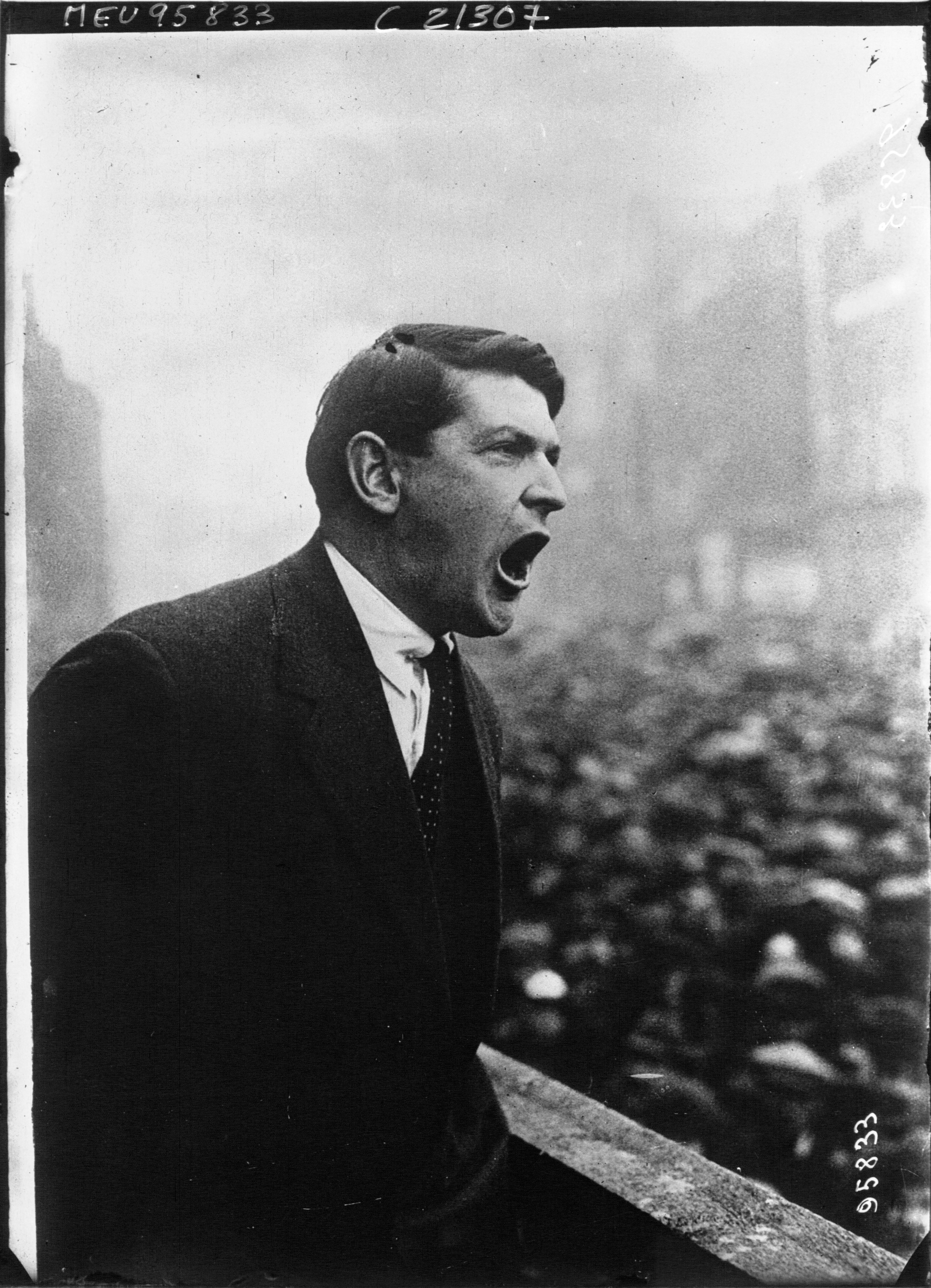
Michael Collins
1890–1922
- Nationality
- United Kingdom of Great Britain and Ireland
- Occupation
- politician
Michael Collins (Irish: MÃcheál à Coileáin; 16 October 1890 â 22 August 1922) was an Irish revolutionary, soldier and politician who was a leading figure in the early-20th century struggle for Irish independence.
Incarceration history
Facilities
- HMP BirminghamDates unknown
- HMP BirminghamDates unknown
Biography
Michael Collins (Irish: MÃcheál à Coileáin; 16 October 1890 â 22 August 1922) was an Irish revolutionary, soldier and politician who was a leading figure in the early-20th century struggle for Irish independence. During the War of Independence he was Director of Intelligence of the Irish Republican Army (IRA). He served in the government of the self-declared Irish Republic as the Minister for Home Affairs and later as the Minister for Finance. He was Chairman of the Provisional Government of the Irish Free State from January 1922 and commander-in-chief of the National Army from July until he died in an ambush in August 1922, during the Civil War. Collins was born in Woodfield, County Cork, the youngest of eight children. He moved to London in 1906 to become a clerk in the Post Office Savings Bank at Blythe House. He was a member of the London GAA, through which he became associated with the Irish Republican Brotherhood and the Gaelic League. He returned to Ireland in January 1916 and fought in the Easter Rising. He was taken prisoner and held in the Frongoch internment camp as a prisoner of war, but he was released in December 1916. Collins subsequently rose through the ranks of the Irish Volunteers and Sinn Féin. He was elected as MP for South Cork in December 1918. Sinn Féin's elected members (later known as TDs) formed an Irish parliament, the First Dáil, in January 1919 and declared the independence of the Irish Republic. Collins was appointed Minister for Finance. In the ensuing War of Independence, he was Director of Organisation and Adjutant General for the Irish Volunteers, and Director of Intelligence of the IRA. He gained fame as a guerrilla warfare strategist, planning many successful attacks on British forces together with 'the Squad', such as the "Bloody Sunday" assassinations of key British intelligence agents in November 1920. After the July 1921 ceasefire, Collins was one of five plenipotentiaries sent by the Dáil cabinet at the request of Ãamon de Valera, to negotiate peace terms in London. The resulting Anglo-Irish Treaty, signed in December 1921, would establish the Irish Free State but depended on an oath of allegiance to the Crown. De Valera and other republican leaders found this clause of the treaty most difficult to accept. Collins viewed the treaty as offering "the freedom to achieve freedom", and helped persuade a majority of the Dáil to ratify the treaty. A provisional government was formed under his chairmanship in early 1922. During this time he secretly provided support for an IRA offensive in Northern Ireland. It was soon disrupted by the Irish Civil War, in which Collins was commander-in-chief of the National Army. He was shot and killed in an ambush by anti-Treaty forces in August 1922.
Related people
Same nationality and era where possible; falls back to shared nationality or era.
 Annot Robinson1874–1925United Kingdom of Great Britain and Ireland
Annot Robinson, nicknamed Annie, (née Wilkie; 8 June 1874 â 29 September 1925) was a Scottish suffragette and pacifist.
 John Maclean1879–1923United Kingdom of Great Britain and Ireland
John Maclean (24 August 1879 â 30 November 1923) was a Scottish schoolteacher and revolutionary socialist of the Red Clydeside era.
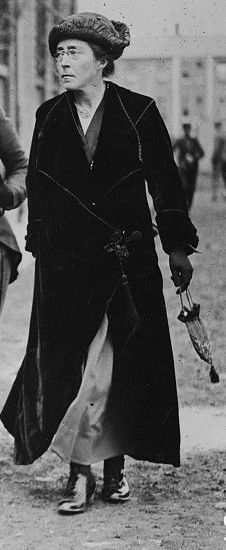 Hanna Sheehy-Skeffington1877–1946United Kingdom of Great Britain and Ireland
Johanna Mary Sheehy-Skeffington (née Sheehy; 24 May 1877 â 20 April 1946) was a suffragette and Irish nationalist.
 Constance Bulwer-Lytton1869–1923United Kingdom of Great Britain and Ireland
Lady Constance Georgina Bulwer-Lytton (12 February 1869 â 22 May 1923), usually known as Constance Lytton, was an influential British suffragette activist, writer, speaker and campaigner for prison reform, votes for women, and birth control.
- Dennis Abbott1909–1974United Kingdom of Great Britain and Ireland
- Sir Richard Lyall Sharp1915–2002United Kingdom of Great Britain and Ireland