All persons
Jonas Šliūpas
1861–1944
- Nationality
- Russian Empire
- Occupation
- writer
Jonas Å liÅ«pas (6 March 1861 â 6 November 1944) was a prominent and prolific Lithuanian activist during the Lithuanian National Revival.
Incarceration history
Facilities
- Kresty PrisonDates unknown
Biography
Jonas Å liÅ«pas (6 March 1861 â 6 November 1944) was a prominent and prolific Lithuanian activist during the Lithuanian National Revival. For 35 years, he lived in the United States working to build national consciousness of Lithuanian Americans. He edited numerous periodicals, organized various societies, and published some 70 books and brochures on various topics. His sharp criticism of the Catholic Church made him highly controversial and unpopular among the conservative Lithuanians. As a student at Mitau Gymnasium, Å liÅ«pas read works by John William Draper that he later credited for laying the foundations for his lifelong dedication to freethought, promotion of science, and criticism of the Catholic Church. His studies at the Imperial Moscow University and Saint Petersburg Imperial University were cut short when was imprisoned for participating in a student riot in 1882. He fled to East Prussia where he edited AuÅ¡ra, the first Lithuanian newspaper. He fled from the German police to United States in June 1884. Despite severe financial hardships, he began publishing Lithuanian newspapers Unija and LietuviÅ¡kasis balsas. Soon, Pennsylvania Lithuanians began publishing VienybÄ lietuvninkų in response to Å liÅ«pas' anti-Catholic and anti-Polish rhetoric. Å liÅ«pas established the Lithuanian Scientific Society which was active until 1896. To secure means of making a decent living, Å liÅ«pas studied medicine at the University of Maryland School of Medicine and started a successful private medical practice in 1891. Å liÅ«pas anti-religious and pro-socialist views grew stronger and louder. He published socialist weekly magazine Nauja gadynÄ (1894â1896), freethrought monthly magazine Laisvoji mintis (1910â1914), various mainly translated texts promoting freethought and publicizing the conflict thesis between Christianity and science, and texts on the history of Lithuania (including three-volume history of Lithuania in 1904â1909). He organized Lithuanian miners in response to the Lattimer massacre in September 1897 and during the Coal strike of 1902 and unsuccessfully ran in the elections to the United States House of Representatives in 1896 and 1900. He was a popular public speaker and by 1907 had given over 1,000 lectures on political, social, religious and scientific subjects. At the outbreak of World War I, Å liÅ«pas organized the Lithuanian National League of America as the third or middle road between the radical socialists and the conservative Catholics. He organized fundraising drives to help Lithuanian war refugees, visited Russia in 1916â1918, and publicized the Lithuanian demands for independence in English-language essays and memorandums (one of them was added to the Congressional Record). In 1919, Å liÅ«pas briefly represented Lithuania in London, at the Paris Peace Conference, and in Latvia. While Å liÅ«pas was respected for his past contributions to Lithuanian causes, he was not invited to the Lithuanian government or held a more prominent public position. Å liÅ«pas returned to Lithuania in 1920 with substantial savings that he invested in the Trade and Industry Bank and other business ventures, many established by his son-in-law Martynas YÄas. Most of these investments were lost when the bank failed in 1927. He served as a mayor of Palanga (1933â1935, 1938â1939, 1941), a developing seaside resort, and had to coordinate the response to the great fire in May 1938 that left some 1,500 people homeless. He continued to promote freethinking â chaired Freethinkers' Society of Ethical Culture, edited reestablished Laisvoji mintis (1933â1940), lobbied for non-religious cemeteries, schools, marriage and birth registrations, published numerous anti-religious texts. He continued to be active in public life until his death. As many other Lithuanians, he fled from the advancing Red Army in October 1944 and died suddenly in Germany.
Related people
Same nationality and era where possible; falls back to shared nationality or era.
 Vladimir Kotulsky1879–1951Russian Empire
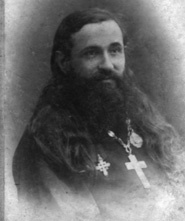 Alexander Glagolev1872–1937Russian Empire
Alexander Alexandrovich Glagolev (Ukrainian: ÐлекÑÐ°Ð½Ð´Ñ ÐлекÑандÑÐ¾Ð²Ð¸Ñ ÐлаголÑв, Russian: ÐлекÑаÌÐ½Ð´Ñ ÐлекÑаÌндÑÐ¾Ð²Ð¸Ñ ÐлагоÌлев; 14 February 1872 â 25 November 1937) was a Russian Orthodox priest and religious philosopher as well as professor of the Kiev Theological Seminary.
- Julius Jacob Hammer1874–1948Russian Empire
- Pati Kremer1867–1943Russian Empire
Pati Kremer (1867â1943) was a Russian revolutionary socialist and pioneer of the General Jewish Workers' Union in Lithuania, Poland and Russia (Bund).
 Sofiya Nikolaevna Bogomolets1856–1892Russian Empire
Sofya Nikolaevna Bogomolets (née Prisetskaya) (Russian: СоÑÑÑ Ðиколаевна ÐогомолеÑÑ; née ÐÑиÑеÑкаÑ) (27 September 1856 â 11 January 1892) was a Russian revolutionary and political prisoner.
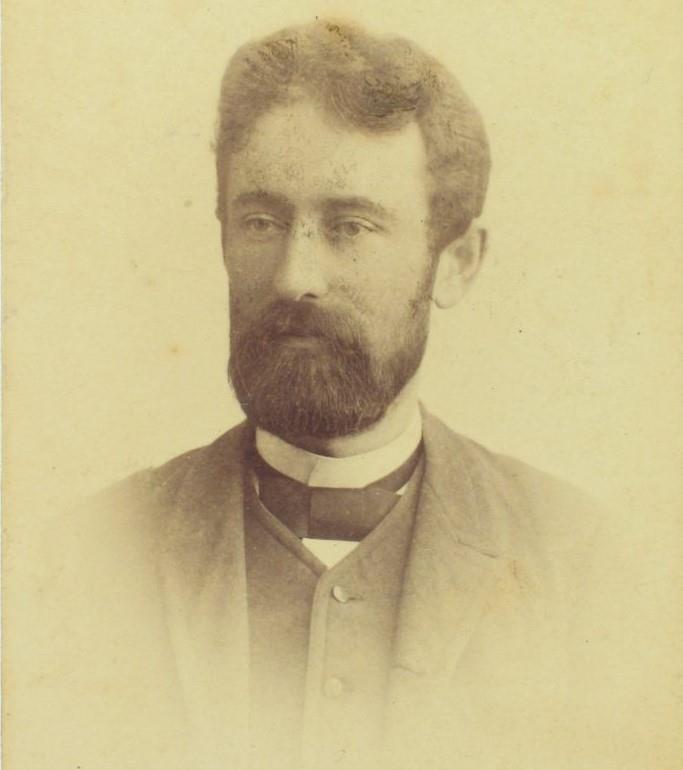 Maksym Slavinsky1868–1945Russian Empire
Maksym Slavinsky (also as Slavynsky Ukrainian: ÐакÑиÌм ÐнÑоÌÐ½Ð¾Ð²Ð¸Ñ Ð¡Ð»Ð°Ð²Ð¸ÌнÑÑкий; Russian: ÐакÑиÌм ÐнÑоÌÐ½Ð¾Ð²Ð¸Ñ Ð¡Ð»Ð°Ð²Ð¸ÌнÑкий; 12 August 1868 in Stavyshche, Kiev Governorate â 23 November 1945 in Kiev) was a Ukrainian journalist, political and public figure, diplomat and statesman.