.png)
Gheorghe Pintilie
1902–1985
- Nationality
- Soviet Union
- Occupation
- locksmith
Incarceration history
Facilities
- Doftana prisonDates unknown
Biography
Gheorghe Pintilie (born Timofiy Bodnarenko, Ukrainian: ÐанÑелей ТимоÑÑй ÐоднаÑенко; also rendered as Pintilie Bodnarenco, nicknamed PantiuÈa; November 9, 1902 â August 21, 1985) was a Soviet and Romanian intelligence agent and political assassin, who served as first head of the Securitate (1948â1959). Born as a subject of the Russian Empire in Tiraspol, he was briefly employed as a manual laborer, and trained as a locksmith, before joining the Red Army cavalry and seeing action in the Russian Civil War. The NKVD shortlisted him for espionage missions in the 1920s, and in 1928 sent him on for such clandestine work in the Kingdom of Romania. Bodnarenko was apprehended there some nine years later, and sentenced to a twenty-years' imprisonment. While at Doftana, he became the ringleader of imprisoned Soviet spies, together with whom he joined the Romanian Communist Party (PCR). He expressed his loyalty toward Gheorghe Gheorghiu-Dej, the jailed communist and emerging factional leader; their tight political camaraderie lasted into the late 1950s. Staging a walk-out from CaransebeÈ Prison just after the coup of August 23, 1944, Bodnarenko was integrated by the Patriotic Combat Formations and the SiguranÈa police, while also reuniting with Soviet intelligence and joining a special unit of the SMERSH. In 1946, he personally killed and buried three of Gheorghiu-Dej's rivals, including Ètefan ForiÈ, the former PCR General Secretary. From August 1948, Emil BodnÄraÈ tasked him with forming the Securitate and leading its General Directorate (DGSP), thus ensuring Soviet control over Romania's intelligence agencies. Under the newly formed communist regime, Bodnarenko was exclusively known as "Gheorghe Pintilie" (or variants thereof), being promoted directly to Lieutenant General, and serving in the Great National Assembly. Participating in the country's communization, he spearheaded the violent campaigns against the perceived class enemiesâconceptualizing "reeducation" through penal labor on the DanubeâBlack Sea Canal, and initiating the first-ever BÄrÄgan deportations. Pintilie and his adjutant Alexandru Nicolschi also played a part in the PiteÈti Experiment, which introduced extreme violence with the goal of brainwashing inmates (primarily those detained for their past in the Iron Guard)âthough it remains unclear whether they willingly stoked such violence, or just allowed it to happen. In engineering the DGSP, General Pintilie surrounded himself with men of working-class origin, who became notorious for their brutality, but also their overall incompetenceâparticularly in dealing with the anti-communist guerillas. Both inside and outside the PCR, Pintilie himself was remembered as an uneducated alcoholic; his preference for orality ensured that the more compromising orders he gave remained unattested. Especially during the early 1950s, he assisted Gheorghiu-Dej in the inner-party struggles, helping to topple Ana Pauker and Vasile Luca, and simultaneously framing, then executing, LucreÈiu PÄtrÄÈcanu. Witnesses of these purges remain divided as to Pintilie's exact role, with some reporting that he vacillated when it came to exercising full repression, and others suggesting that he exacerbated the violence, beyond what was required of him. In the late 1950s, his projects were being vetoed by the PCR Central Committee, just as Gheorghiu-Dej was proceeding with Romania's emancipation from the Soviet sphere. In 1959, Pintilie lost his Securitate offices and was assigned to lead the MiliÈia, a more civilian-controlled component of the national police force. Pushed into full retirement during the anti-Soviet backlash of 1963, Pintilie then watched as Gheorghiu-Dej's posthumous successor, Nicolae CeauÈescu, proceeded to expose some of the crimes committed by Securitate personnel in previous decades. He cooperated in the investigation, openly discussing some of his individual crimes, but was never questioned regarding his involvement in mass purges;
Related people
Same nationality and era where possible; falls back to shared nationality or era.
- Semyon Lyandres1907–1968Soviet Union
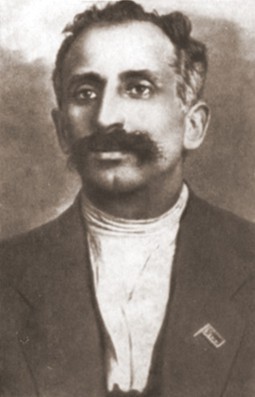 Osip Piatnitsky1882–1938Soviet Union
Osip Aaronovitch Piatnitsky (Russian: ÐÑип ÐÑÐ¾Ð½Ð¾Ð²Ð¸Ñ ÐÑÑниÑкий; Lithuanian: Josifas Piatnickis; born Iosif Oriolovich Tarshis; 29 January [O.S.
- Sergey Danilov1895–1944Soviet Union
- Konstantin Shchegodskiy1911–1989Soviet Union
Konstantin Vasilyevich Shchegotsky (Russian: ÐонÑÑанÑин ÐаÑилÑÐµÐ²Ð¸Ñ Ð©ÐµÐ³Ð¾Ñкий; April 13, 1911 â January 23, 1989) was a Soviet football player and coach from Moscow.
 Konstantin Brendyuchkov1908–1994Soviet Union
- Vasily Terentev1899–1957Soviet Union
Vasily Grigorevich Terentev (March 3, 1899 â January 26, 1957) was a Soviet military leader, Lieutenant general (November 2, 1944).