
George Morland
1763–1804
- Nationality
- Kingdom of Great Britain
- Occupation
- painter
George Morland (26 June 1763 â 29 October 1804) was an English painter.
Incarceration history
Facilities
- MarshalseaDates unknown
Biography
George Morland (26 June 1763 â 29 October 1804) was an English painter. His early work was influenced by Francis Wheatley, but after the 1790s he came into his own style. His best compositions focus on rustic scenes: farms and hunting; smugglers and gypsies; and rich, textured landscapes informed by Dutch Golden Age painting. Much of his work was intended for reproduction in prints, from which his publishers made a good deal more money than he did. Despite being a heavy drinker who enjoyed a rackety lifestyle, he was enormously prolific, though the quality of his work increasingly suffered. After many troubles with debts in his last decade, he died at the age of 41.
Related people
Same nationality and era where possible; falls back to shared nationality or era.
- Charles Hall1740–1825Kingdom of Great Britain
Charles Hall (1740â1825) was a British physician, social critic and Ricardian socialist who published The Effects of Civilization on the People in European States in 1805, condemning capitalism for its inability to provide for the poor.
 Lord George Gordon1752–1793Kingdom of Great Britain
Lord George Gordon (26 December 1751 â 1 November 1793) was a British nobleman and politician best known for lending his name to the Gordon Riots of 1780.
- John Van Arsdale1756–1836Kingdom of Great Britain
John Jacob Van Arsdale (1756 â 1836) was an American Revolutionary War soldier, noted for his legendary participation in the Evacuation Day flag-raising in 1783.
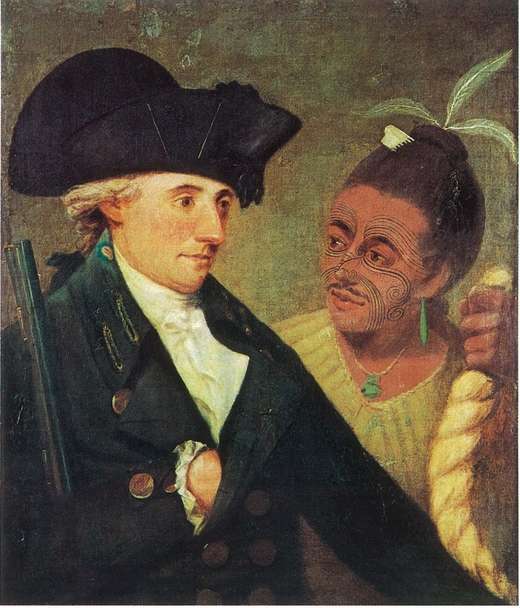 Charles Clerke1741–1779Kingdom of Great Britain
Captain Charles Clerke RN (22 August 1741 â 22 August 1779) was an officer in the Royal Navy who sailed on four voyages of exploration (including three circumnavigations), three with Captain James Cook.
_(14803275713).jpg) Thomas Bambridge1741Kingdom of Great Britain
Thomas Bambridge1741Kingdom of Great BritainThomas Bambridge (died 1741) was a British attorney who became a notorious warden of the Fleet Prison in London. Bambridge became warden of the Fleet in 1728.
 Jonathan Wild1683–1725Kingdom of Great Britain
Jonathan Wild, also spelled Wilde (1682 or 1683 â 24 May 1725), was an English thief-taker and a major figure in London's criminal underworld, notable for operating on both sides of the law, posing as a public-spirited vigilante entitled the "Thief-Taker General".