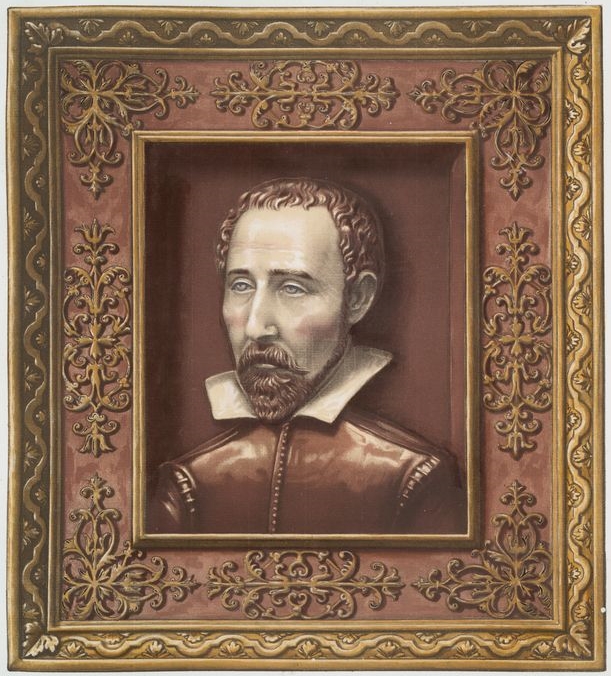
Bernard Palissy
1510–1589
- Nationality
- France
- Occupation
- chemist
Bernard Palissy (French pronunciation: [bÉÊnaÊ palisi]; c.
Incarceration history
Facilities
- BastilleDates unknown
- ConciergerieDates unknown
- BastilleDates unknown
- ConciergerieDates unknown
Biography
Bernard Palissy (French pronunciation: [bÉÊnaÊ palisi]; c. 1510 â c. 1589) was a French Huguenot potter, hydraulics engineer and craftsman, famous for having struggled for sixteen years to imitate Chinese porcelain. He is best known for his so-called "rusticware", typically highly decorated large oval platters featuring small animals in relief among vegetation, the animals apparently often being moulded from casts taken of dead specimens. It is often difficult to distinguish examples from Palissy's own workshop and those of a number of "followers" who rapidly adopted his style. Imitations and adaptations of his style continued to be made in France until roughly 1800, and then revived considerably in the 19th century. In the 19th century, Palissy's pottery became the inspiration for Mintons Ltd's Victorian majolica, which was exhibited at the London Great Exhibition of 1851 under the name "Palissy ware". Palissy is known for his contributions to the natural sciences, and is famous for discovering principles of geology, hydrology and fossil formation. A Protestant, Palissy was imprisoned for his belief during the tumultuous French Wars of Religion and sentenced to death. He died of poor treatment in the Bastille in 1589 (1590 according to Burty 1886).
Related people
Same nationality and era where possible; falls back to shared nationality or era.
- Pierre Le Cornu1505–1612France
 Robert Ploton1901–1975France
- Gilles Gravoille1914–1991France
 Hubert de Lagarde1898–1945France
- Julien Gracq1910–2007France
Julien Gracq (French: [gÊak]; born Louis Poirier; 27 July 1910 â 22 December 2007) was a French writer.
- Le Guennan Monique1927–1999France