All persons
Augustine Skinner
1590–1672
- Occupation
- politician
Augustine Skinner (c.
Incarceration history
Facilities
- Fleet PrisonDates unknown
Biography
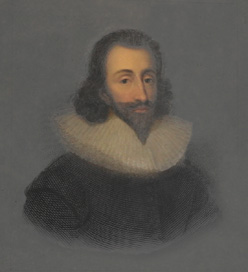
Augustine Skinner (c. 1594 â 11 June 1672) was an English politician who sat in the House of Commons variously between 1642 and 1659. He took the Parliamentary side during the English Civil War. Skinner was of Tutsham Hall at West Farleigh in Kent and belonged to a newly arrived rather than established Kent family (his ancestors being from Devon). In 1642, he was elected Member of Parliament member for Kent the Long Parliament. He supported parliament in the Civil War and was sufficiently orthodox in his support to survive Pride's Purge. He refused to accept appointment as a Commissioner in the trial of the King. After the expulsion of the Rump Parliament he represented Kent again in the Parliament of 1654, and in the restored Rump in 1659. He was an active justice of the peace throughout the Commonwealth period, and it was said that Cromwell had great confidence in him as a magistrate. Skinner borrowed money to buy two manors which had been confiscated from the Bishop of Rochester; when these were restored to their original ownership at the Restoration, he found himself heavily in debt. His brother William was in similar difficulties, and together they procured a private act of Parliament, Skinner's Estate Act 1660 (12 Cha. 2. c. 11 Pr.), to allow them to sell other lands to raise funds, Skinner's seat at Tutsham Hall being sold to one Edward Goulston. Skinner was still unable to meet his obligations and, being arrested for debt, he eventually died in the Fleet Prison in 1672, aged 78. He was buried at West Farleigh. Skinner made two good marriages, to Elizabeth Twisden, daughter of Serjeant-at-Law Richard Braithwaite, and to Ann Franklin, daughter of Thomas Franklin, an Alderman of the City of London; but his only son, also called Augustine (born 1618), lived less than a year, so that his heir was his brother, William.
Related people
Same nationality and era where possible; falls back to shared nationality or era.
.jpg) Jean-Baptiste d'Ornano1581–1626Kingdom of France
Jean-Baptiste d'Ornano1581–1626Kingdom of FranceJean-Baptiste d'Ornano, Marquis de Montlaur (1581â1626) was a French nobleman and Marshal of France (1626).
 John Eliot1592–1632Kingdom of England
Sir John Eliot (11 April 1592 â 27 November 1632) was an English statesman who was serially imprisoned in the Tower of London, where he eventually died, by King Charles I for advocating the rights and privileges of Parliament.
 Samuel Vassall1603–1667
Samuel Vassall (1586â1667) was an English merchant, politician, and slave trader who sat in the House of Commons from 1640 to 1648.
- Christopher Brooke1570–1628
Christopher Brooke (died 1628) was an English poet, lawyer and politician who sat in the House of Commons between 1604 and 1626.
- Sir Richard Grosvenor, 1st Baronet1585–1645Kingdom of England
Sir Richard Grosvenor, 1st Baronet (9 January 1585 â 14 September 1645) was an English politician who sat in the House of Commons at various times between 1621 and 1629.