All persons
August Cesarec
1893–1941
- Nationality
- Hungary
- Occupation
- journalist
August Cesarec (4 December 1893 â 17 July 1941) was a Croatian writer and communist activist from the interwar period. Cesarec was born in Zagreb, then part of Austria-Hungary.
Incarceration history
Facilities
- Kerestinec prisonDates unknown
Biography
August Cesarec (4 December 1893 â 17 July 1941) was a Croatian writer and communist activist from the interwar period. Cesarec was born in Zagreb, then part of Austria-Hungary. He was the son of a carpenter who was a member of the Social Democratic Party, and August himself published a short story in the party's magazine as early as 1910. As a high-school student he became involved in radical nationalist politics and joined the group that tried to assassinate Croatian ban (viceroy) Slavko Cuvaj in 1912. For his role in the failed assassination he received a prison sentence of two years, which he served in Sremska Mitrovica penitentiary (in present-day Serbia). He was provisionally released after 21 months because he contracted tuberculosis. In prison he began to study books by Stirner and Kropotkin, which gradually led him to adopt Marxist philosophy. When World War I started, Austro-Hungarian police put him on a watchlist. In 1915 he was drafted in the Austro-Hungarian Army, and spent most of the war in KruÅ¡evac, from where he returned in 1918. By the end of the war he became an enthusiastic supporter of the Russian 1917 October Revolution and of Communism. After the war, he became a member of the Communist Party of Yugoslavia. Consequently he often had to deal with police; in 1919 was implicated in the so-called Diamantstein affair, which made him escape to Prague and Vienna. In 1920 he returned, but next year the Kingdom of Yugoslavia issued the Proclamation (Obznana) which banned the Communist Party and he went underground. Cesarec was collaborating with the terrorist organization Crvena pravda to the extent of being there for Alija AlijagiÄ the night before he was executed for assassinating the Yugoslav Minister of Internal Affairs. Later he published favorable obituaries of AlijagiÄ, which led to multiple incarcerations. Cesarec, who had discovered his literary talent in his teenage years, became known as one of the leading Croatian literary figures of his time. Together with Miroslav Krleža he was one of the founders of the literary magazine Plamen in 1919. Cesarec had a significant body of work in literary magazines, over 200 articles in total, two collections of which were separately published in the Kingdom of Yugoslavia. He initially wrote a number of poems, which were often an expression of his feelings and ideas on social and political issues. He later stopped writing poems and switched to prose. He wrote about seventy works of prose, most of them short stories and novellas, with some novels, a handful of dramas and some travel memoirs (not all of which were literary). The bulk of these were written between 1922 and 1932. Only a third of these had been published during his lifetime. In 1922 he fled to Moscow for a congress of the Comintern, and as he returned in 1923 he was captured and sentenced to six months prison time. In 1928 he became a member of Matica hrvatska in response to anti-Croatian politics of the Yugoslav regime, and in 1929 he was briefly jailed again. In 1933, he left Matica hrvatska because he did not agree with the prevailing pro-fascist influences in the organization at the time. In 1934, he illegally crossed the border again to attend the First Congress of Soviet Writers in Moscow and then the 7th Congress of the Comintern in 1935. In 1937, he went to Spain during the Spanish Civil War of 1936-1939. He then went to Paris, and in 1938 returned to Yugoslavia, where he was arrested at the border again. Cesarec was a known polemicist, having contributed to Plamen, Borba, Književna republika, Komunista, ZaÅ¡tita Äovjeka, Nova rijeÄ and Izraz. He often argued for Marxist points of view, having redacted and prepared for print the Serbo-Croatian translation of Das Kapital made by MoÅ¡e Pijade and Rodoljub ÄolakoviÄ. At the same time, Cesarec advocated for the Croatian peasant movements led by Stjepan RadiÄ, against Greater Serbian hegemony, and was one of the first people at the time to publicly rec
Related people
Same nationality and era where possible; falls back to shared nationality or era.
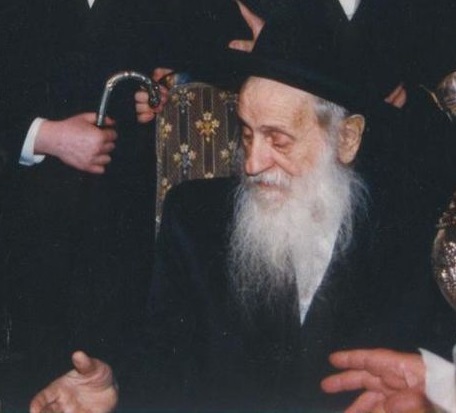 Moshe Teitelbaum1914–2006Hungary
Moshe (Moses) Teitelbaum (Yiddish: ××©× ×ײ××××±×; November 17, 1914 â April 24, 2006) was a Hungarian-American Hasidic rebbe and the world leader of the Satmar Hasidim.
 Amos Manor1918–2007Hungary
Amos Manor (Hebrew: ×¢××ס ×× ×ר; October 8, 1918 â August 5, 2007) was Director of the Shin Bet, Israel's internal intelligence and security service, from 1953 until 1963.
 Aranka Böhm1893–1944Hungary
- Yissachar Shlomo Teichtal1885–1945Hungary
Yissachar Shlomo Teichtal (9 February 1885â24 January 1945) was one of the few European rabbis to break ranks with Ashkenazi Orthodox Judaism to support an active effort to settle the Land of Israel, then part of Ottoman Palestine and later Mandatory Palestine.
 Stefan Jurech1898–1945Hungary
- Adolf Scheuer1911Hungary